 FlipTrip Team

The first trip we planned entirely ourselves, we made the classic mistake: we booked a non-refundable apartment in Florence before we’d worked out that our cheapest flight landed in Milan, three hours away, at 11pm. That €180 lesson is the reason this guide exists. Planning a trip independently isn’t about willpower or spreadsheets you’ll never open. It’s about doing a handful of steps in the right order, with a small set of tools that each do one job well.
We plan every FlipTrip route this way. Below is the exact stack — flights, rail, ferries, maps, money, connectivity — and the sequence that keeps deposits safe and stress low.
Start with constraints, not a destination
The temptation is to pick a dreamy city first and reverse-engineer the trip around it. That’s backwards, and it’s how people end up paying Zurich prices on a Lisbon budget. We lock the boring numbers first: total budget, exact dates (or a two-week window), and how many days we can actually take off. Everything downstream flows from those three.
Only then do we choose the shape of the trip. Three shapes cover almost everything:
- One city, deep. Five nights in Rome, no train tickets to manage. Lowest logistics, highest depth.
- A loop. Rome to Florence to Venice and out — you fly into one city and out of another.
- Hub and spokes. One base, day trips radiating out. Great for slow travelers and anyone who hates repacking.
Naming the shape early decides how much booking you’ll do. A loop needs intercity transport planned before you touch hotels; a hub trip barely needs any. If you’re still deciding whether a region works as a loop or a base, our guide to day trips across Europe shows which cities make good springboards.
Check entry rules before you spend a euro
This is the step people skip and regret. Passport validity, visa or visa-waiver requirements, and the new ETIAS authorization for the Schengen area can all take days to sort — and a flight booked before you’ve checked is a flight you might not be able to use. We confirm entry rules six weeks out, minimum. Even “visa-free” usually means an online approval you still have to apply for. Government immigration sites are the only source we trust here; a forum post from 2023 is not.
Map the route before you book anything
Once we know the shape, we sketch the route on a multi-modal router before committing to a single ticket. Rome2Rio is our first stop for this. Type in two cities and it lays out every way to connect them — plane, train, bus, ferry, even the driving distance and rough fuel cost — with ballpark prices and journey times side by side. It won’t always surface the cheapest fare, and it’s not where we buy, but for answering “is Split to Dubrovnik better by bus or ferry?” in ten seconds, nothing beats it.
Rome2Rio’s real value is catching the routes you didn’t know existed: the overnight train, the €19 BlaBlaCar rideshare, the ferry that turns a boring transfer into the best afternoon of the trip. We treat it as the map, then move to the specialists to book each leg.
Booking transport: the specialists
For flights, we start with Google Flights. The Explore map (“where can I go from here, cheapest, in this window?”) is genuinely trip-shaping — the choice of which city to fly into and out of can swing the total fare by 30%. We set a price alert on the exact route the moment dates firm up, watch for a week or two, then usually book directly with the airline so changes and seat selection stay simple. Skyscanner’s “Everywhere” search does the same job if you’re destination-flexible.
Overland is where a Europe trip gets interesting, and it’s where a dedicated tool earns its place. For trains, buses and ferries in one search, we lean on Omio — it pulls fares from national operators like Trenitalia, Deutsche Bahn and Renfe alongside coaches and boats, so a mixed journey (train to the coast, ferry to the island) comes back as one comparable list. For rail-heavy routes we cross-check Trainline, which tends to have the smartest routing engine for connections and a genuinely good app for live platform info. If your trip is nothing but trains across several countries, price a rail pass against point-to-point tickets before deciding — a 2026 second-class adult Interrail Global Pass runs about €283 for four travel days in a month, which only wins if you’re moving often and far.
One habit that has saved us repeatedly: after finding the best option on an aggregator, we open the operator’s own site to confirm the fare, refund rules and seat-reservation fees. Aggregators are for comparing; the operator is often where the real price and the fine print live.
Omio: Trains, Buses & Ferries
Compare European trains, buses and ferries in one search, then book the legs that fit your route.
When the countryside is the point — a Tuscan hill circuit, the Ring Road, a Douro drive no train reaches — we price a rental through DiscoverCars, which compares suppliers rather than locking you into one desk at the airport. We only rent when the route actually needs it; in most European cities a car is a liability you pay to park.
Accommodation comes after the route, never before
Here’s the order that would have saved us that Florence apartment: route first, then beds. Hotel location is downstream of where you’ll actually spend your days, so we layer stays onto the itinerary rather than building the trip around a room we liked the photos of.
Once the route is set, we book the first and last nights early (arriving jet-lagged with nowhere to sleep is its own kind of misery) and stay flexible in the middle. We filter hard for free cancellation, because plans shift. Choosing the neighborhood matters more than the star rating — a calm area one transit stop from the center usually beats a “central” room above a nightclub. We wrote a full method for this in our guide to picking your base in any European city, and it pairs directly with the cost planning below.
Money: stop donating to exchange desks
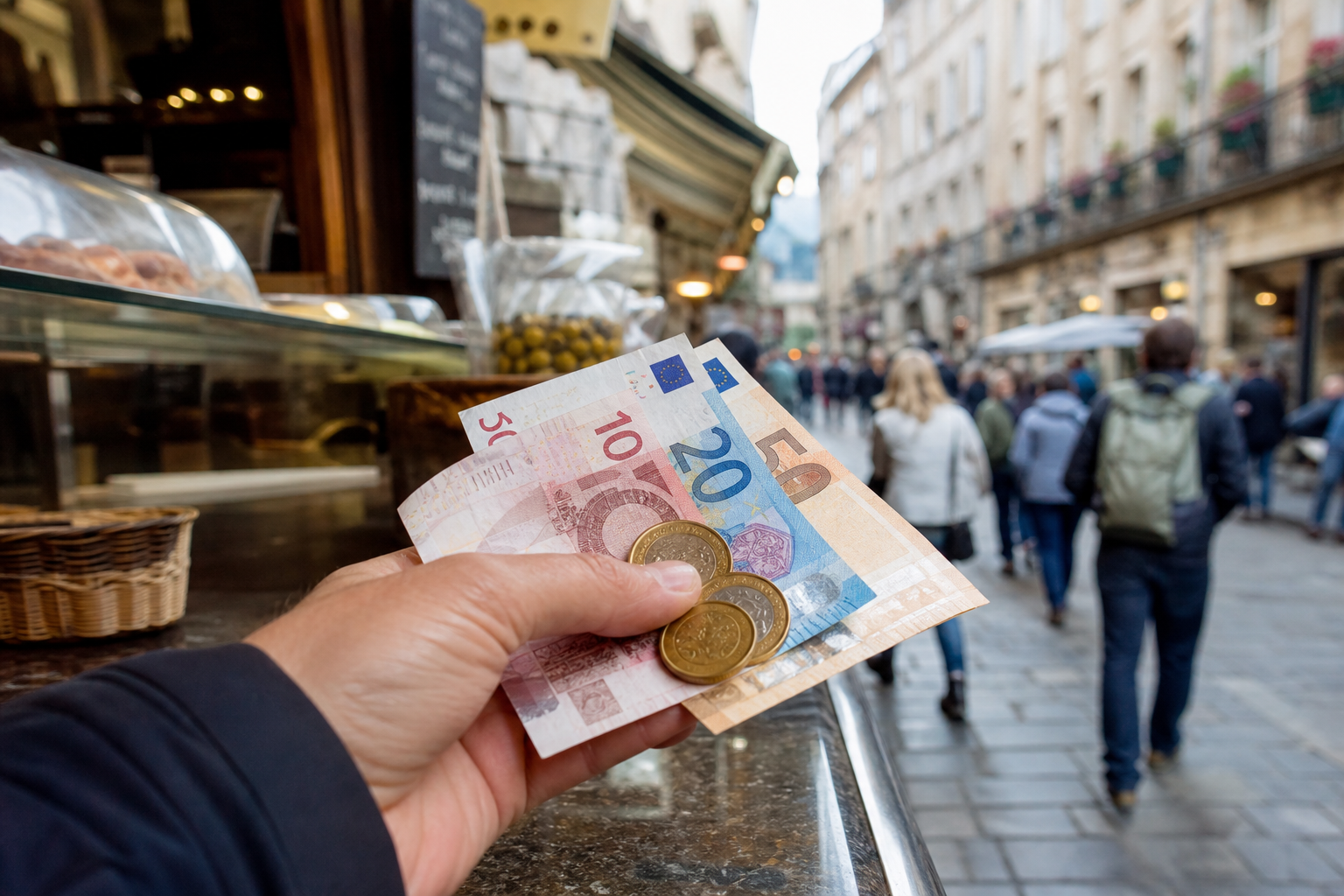
Two quiet money leaks drain independent trips: bad exchange rates and card fees. We carry a Wise or Revolut account for spending abroad — you hold euros at the real mid-market rate and tap to pay without the 3% foreign-transaction surcharge a normal card adds to every coffee. For cash (markets, small trattorie, the occasional stubborn ferry kiosk), we withdraw from a bank-owned ATM and always decline the machine’s offer to “convert to your home currency.” That prompt, called dynamic currency conversion, is a worse rate every single time. Let your own bank do the math.
A small buffer belongs in the plan too. We add 15–20% on top of the estimated total for tourist taxes, the spontaneous long lunch, and the train we missed. If you want the full numbers, our Europe trip cost breakdown puts realistic 2026 figures against every category.
Connectivity: land already online
Nothing derails a plan faster than landing with no data, your maps app spinning, and a taxi driver quoting a number you can’t verify. We set up connectivity before we fly. A regional eSIM is the cleanest fix — you install it at home, it activates when you arrive, and one plan roams across most of the continent. Airalo’s Eurolink covers 42 countries (including the UK and Switzerland, which cheaper plans quietly drop), and a 10GB/30-day plan lands around €27.50, which makes daily roaming charges look absurd. For a two-week trip, 5–10GB is plenty if your hotel has Wi-Fi.
Airalo Europe eSIM (Eurolink)
42 countries on one plan, activated before you land. From €4.50 for a light trip.
On public and hotel Wi-Fi we run a VPN out of habit, and we buy travel insurance within 48 hours of booking flights — Heymondo is our default for short and mid trips because the app handles claims from your phone and there’s a built-in reader discount. Whether insurance is worth it at all depends on your trip and your existing cover; we made the honest case in our planning hub.
The itinerary app that ties it together
With flights, trains and beds booked, the loose ends are confirmations scattered across six inboxes. We keep them in one place. TripIt still does the job it’s famous for — forward every confirmation email and it builds a day-by-day timeline automatically, offline-accessible, no manual entry. Google Maps does the rest: we save every place we want to visit as a pin, then group the pins by day so we’re never zig-zagging across a city. Wanderlog and Notion templates work for people who like more structure; the tool matters less than actually having one source of truth you can open on a train with no signal.
A quick booking order to steal
If you remember nothing else, remember the sequence. Doing these out of order is what costs money:
- Constraints — budget, dates, days off.
- Entry rules — passport, visa, ETIAS.
- Route map — Rome2Rio to see the options.
- Flights — book the in/out cities that shape the trip.
- Intercity transport — Omio and Trainline for the legs between.
- Accommodation — first and last nights first, free cancellation everywhere.
- Ground logistics — transit passes, eSIM, cash, insurance.
Where FlipTrip fits — and how to get paid for what you know
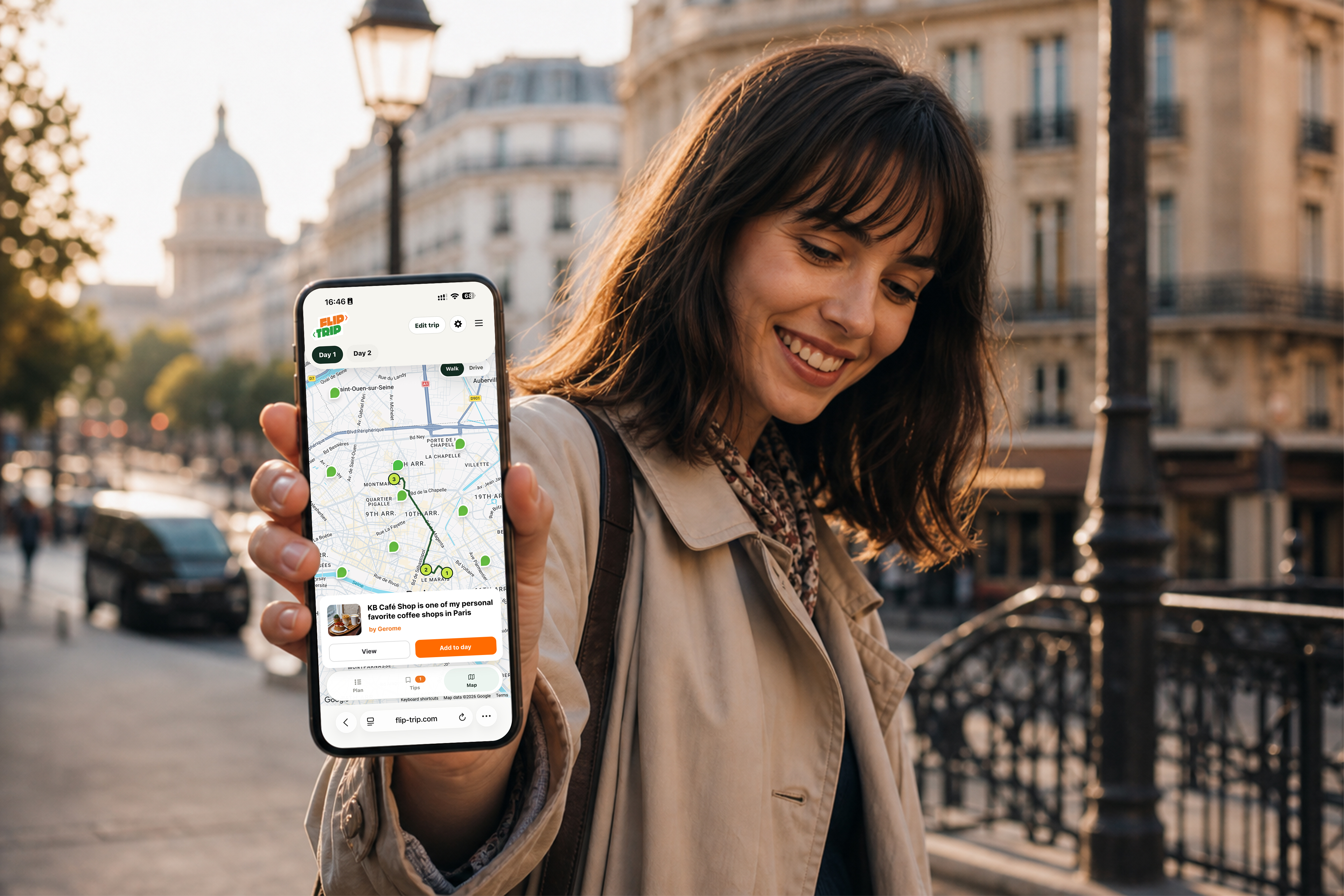
Once you’ve planned a couple of trips this way, something clicks: you know a city’s streets better than most published guides do. That’s the whole idea behind FlipTrip. Our free self-guided walks in Rome, Paris and beyond are built by travelers who mapped a genuinely good route and wanted to share it — no tour bus, no fixed departure time, just a walk you follow at your own pace.
If you can plan a great route, you can publish one. Our Trip Visualizer lets you build a self-guided walk block by block — drop your locations on a map, add the alternatives and the tips only a local would know, write the story between the stops — and once it clears moderation it goes live for travelers to download. You earn when they do. You don’t need to be a professional guide; you need to be specific, structured, and genuinely excited about your city. Start at Become a Local.
That’s the version of independent travel we like best: you plan the trip, you keep the money an agent would have taken, and if you’re good at it, the trips you plan can start paying you back. Open Rome2Rio, sketch the route, and book the first leg — the rest follows in order.