 FlipTrip Team
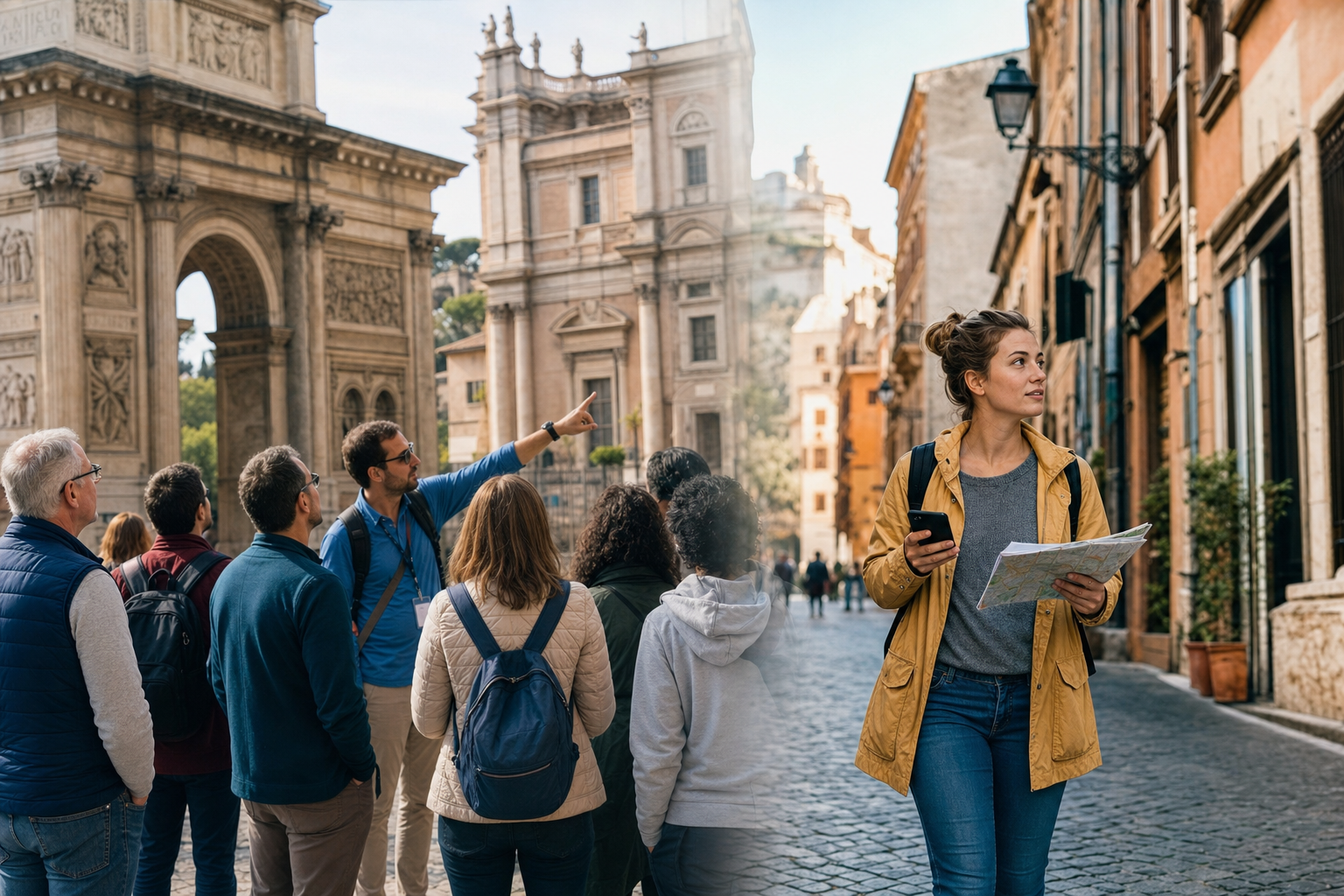
The tour industry has a quiet incentive problem: almost every article comparing guided trips to doing it yourself is published by someone who earns a commission when you book the tour. So the “honest verdict” tilts one way with suspicious regularity. We earn commission too — and we still think you should skip the tour on most European day trips. Here’s the framework that tells you which side of the line you’re on.
It comes down to four variables. Get honest about each one and the answer usually settles itself in about two minutes.
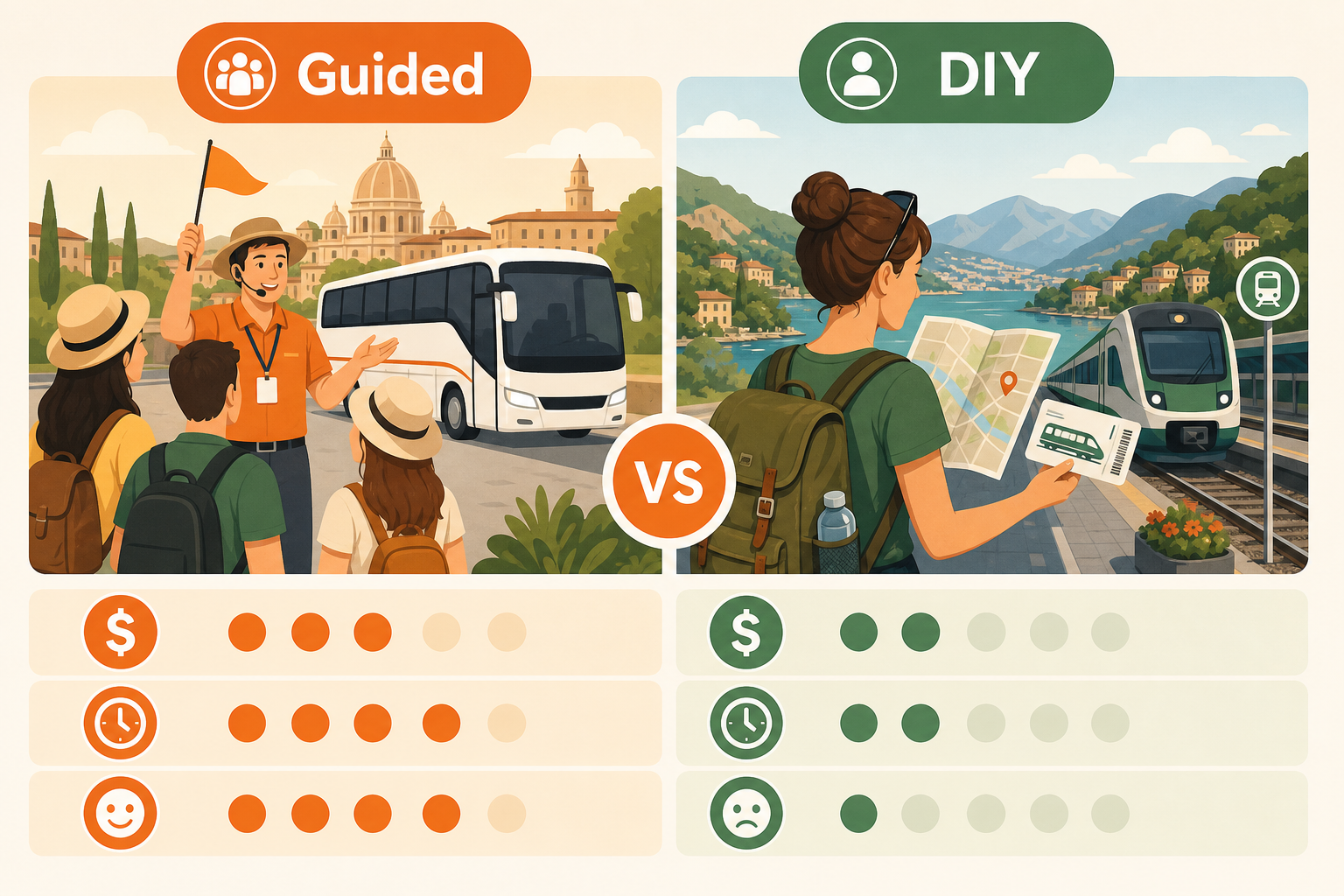
Variable 1: What is actually hard about this trip?
This is the question that does most of the work, and it’s the one people skip.
Every day trip has a “hard part,” and a guide is only worth paying for if they solve it. There are really three candidates:
- The transport. Multiple connections, a route with no public transit, a coastal road you’d rather not drive. If getting there is genuinely awkward, a coach that picks you up at your hotel is buying back real time.
- The tickets. Timed-entry sites with vicious queues. At peak season the Doge’s Palace line in Venice can top two hours; a tour that includes skip-the-line entry hands you back half a morning.
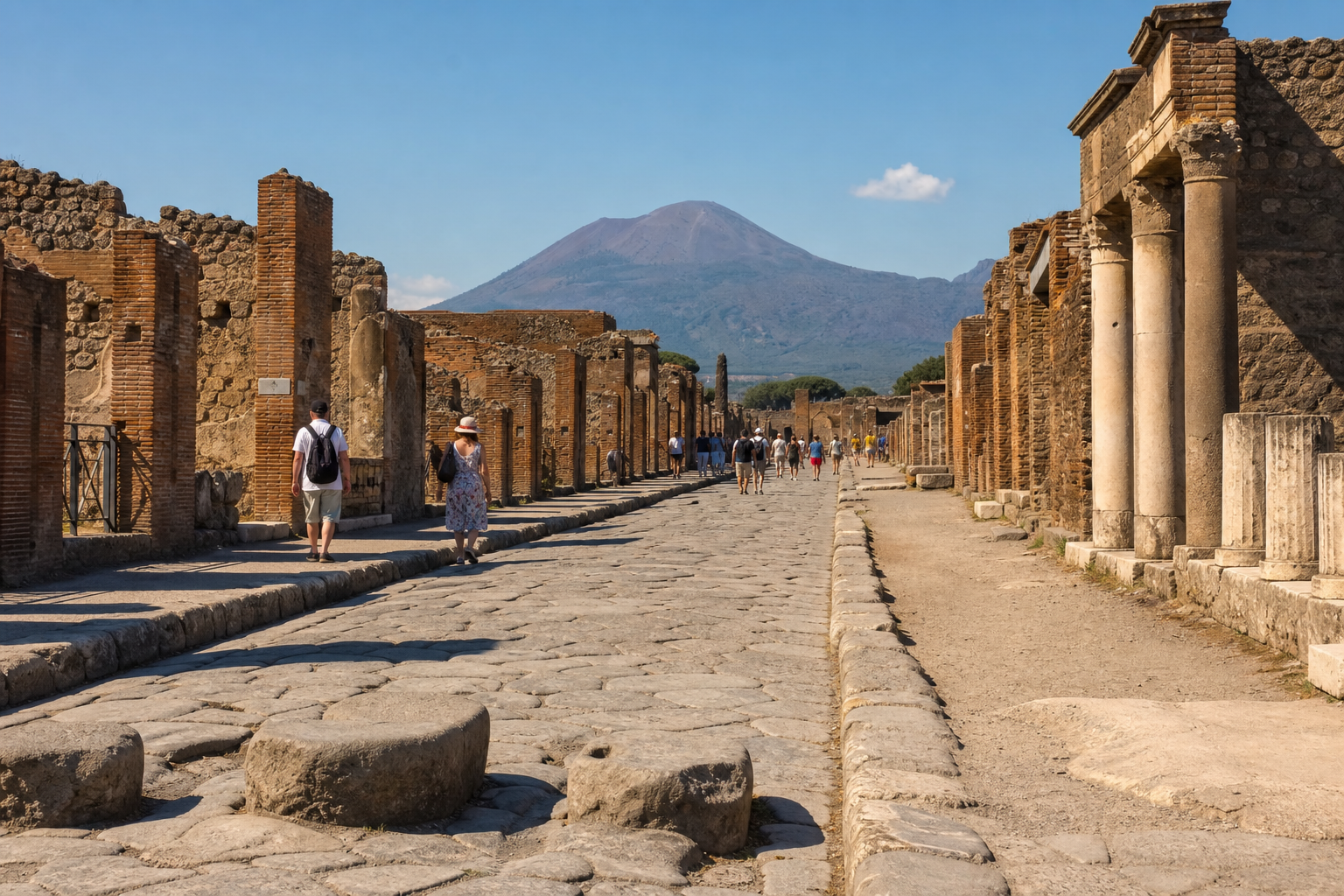
- The understanding. Sites with almost no signage — Pompeii is the classic — where a self-guided visit leaves most people wandering, confused about what they’re looking at.
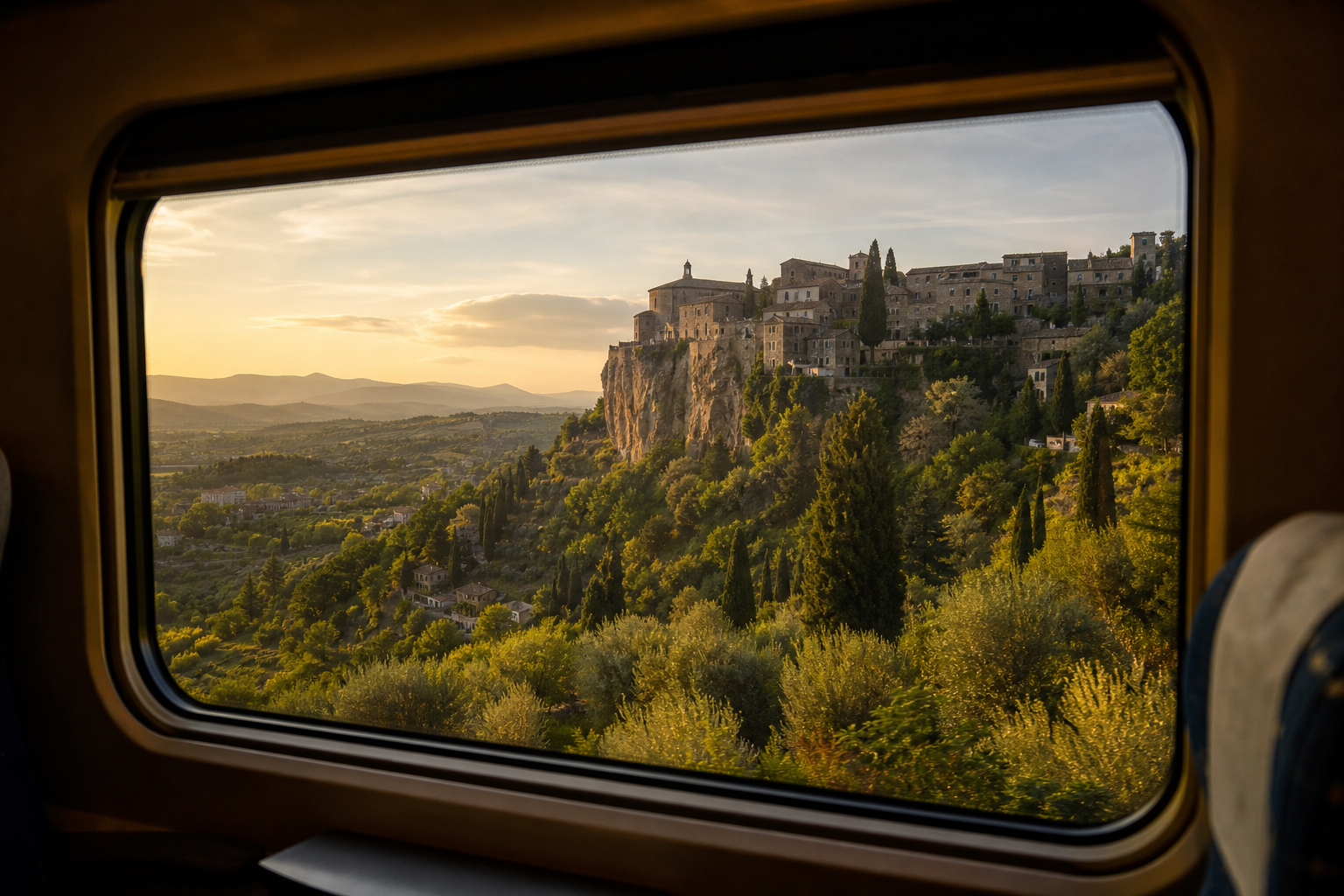
If a trip has none of these, the guide is charging you to buy a train ticket and read a plaque. A fast train to a walkable town like Orvieto or Bruges has no hard part worth outsourcing. Take it yourself.
Variable 2: The real cost gap (not the sticker gap)
DIY looks dramatically cheaper on paper. Once you count everything, the gap narrows more than tour-sellers admit and less than tour-sellers claim.
Take Pompeii from Rome. The independent route — high-speed train to Naples, the Circumvesuviana regional line, plus the entry ticket — runs roughly €78–118 per person. A well-reviewed guided coach tour with skip-the-line entry has been going for around €54.50. On that route the tour is genuinely cheaper, because it buys transport in bulk and you’re not paying twice for a guide-shaped gap in your knowledge.
Now take Tivoli. Independent: about €3–4 each way on the regional train, €15 for Villa d’Este, €12 for Hadrian’s Villa — call it €45–60 all in. The guided version is €55–100 for the same two sites. Here DIY wins outright.
Same city, opposite answers. The honest cost gap on most straightforward European day trips is only 10–20% once you price your wasted time — but on complex logistics it can flip entirely in the tour’s favour, and on simple ones the tour is pure markup. Do the specific sum; don’t trust the general rule.
Variable 3: How much is your time worth on this trip?
Planning a day well takes hours — researching connections, comparing fares, booking timed entries, sequencing the day so you’re not doubling back. On a single simple trip that’s 20 minutes of work. On a complex multi-stop day it can be a whole evening.
A guided tour erases that planning time and, more importantly, de-risks the day. If the train is cancelled, someone else solves it. If a ticket window is closed, that’s not your problem. When you have more time than money — a long, slow trip where the planning is part of the fun — DIY makes sense. When you have three days in a country and one shot at a bucket-list site, paying to remove the risk of getting it wrong can be the rational call even for confident independent travellers.
Be honest about which describes you on this trip. The same person is a DIY purist on a two-week rail journey and grateful for a tour on a tight long weekend.
Variable 4: Group size cuts both ways
Group size is the variable most people get backwards.
For per-person tour pricing, more people usually means DIY pulls ahead, because a rental car or a set of train tickets is often a flat cost split across the group while the tour charges each head. Four people driving to a cluster of spread-out sites will nearly always beat four tour tickets.
But group size also raises the coordination tax. Herding six people with different energy levels, diets and museum stamina is work, and someone has to do it. On a guided tour that someone isn’t you — you get to be a participant instead of the unpaid trip manager. If your group is prone to friction, the tour’s fixed structure can be worth more than the euros it costs.
So: small confident group, spread-out sites, easy transport — DIY. Large group, one complex site, and you’re the one who always ends up organising everyone — the tour may keep the peace.
What DIY actually asks of you
People underrate the guided option because they picture the good version of DIY: the smooth day where every train is on time and every ticket window is open. Plan for the bad version instead, and the honest comparison gets sharper.
Doing it yourself means you own the whole chain. You buy the right ticket type for the right train, validate it if it’s a paper regional, find the correct platform in a station where the signage may be in a language you do not read, make the connection with enough buffer that one late train does not collapse the day, and have a backup if the last service home sells out. None of that is hard on its own. Stacked into a single tight day at an unfamiliar site, it is genuine mental load, and it runs in the background the entire time, quietly taxing the day you came to enjoy.
That is the real thing a tour sells: not just transport, but the removal of that background hum. Whether it is worth the price depends entirely on how heavy the chain is on your specific route. A single direct train to a walkable town barely registers. Three connections, a timed entry and a coastal bus that may or may not show up is a different animal, and paying someone to carry it can be the difference between a great day and a stressful one. Weigh the chain honestly and the decision stops being about pride and starts being about which day you would actually rather have.
The two-minute test
Run these five questions. Each “yes” is a point for going guided:
- Does the route need more than one connection or have no useful public transport?
- Does the main site have long timed-entry queues you’d otherwise stand in?
- Is the site meaningless without expert context (few signs, dense history)?
- Are you short on time, with no slack to absorb a missed connection?
- Are you coordinating a group and would rather not run the logistics?
Three or more yeses: book the guided trip, and prioritise small group size and free cancellation. Two or fewer: do it yourself and keep the difference. The middle case — one hard site inside an otherwise easy trip — points to the smartest option of all.
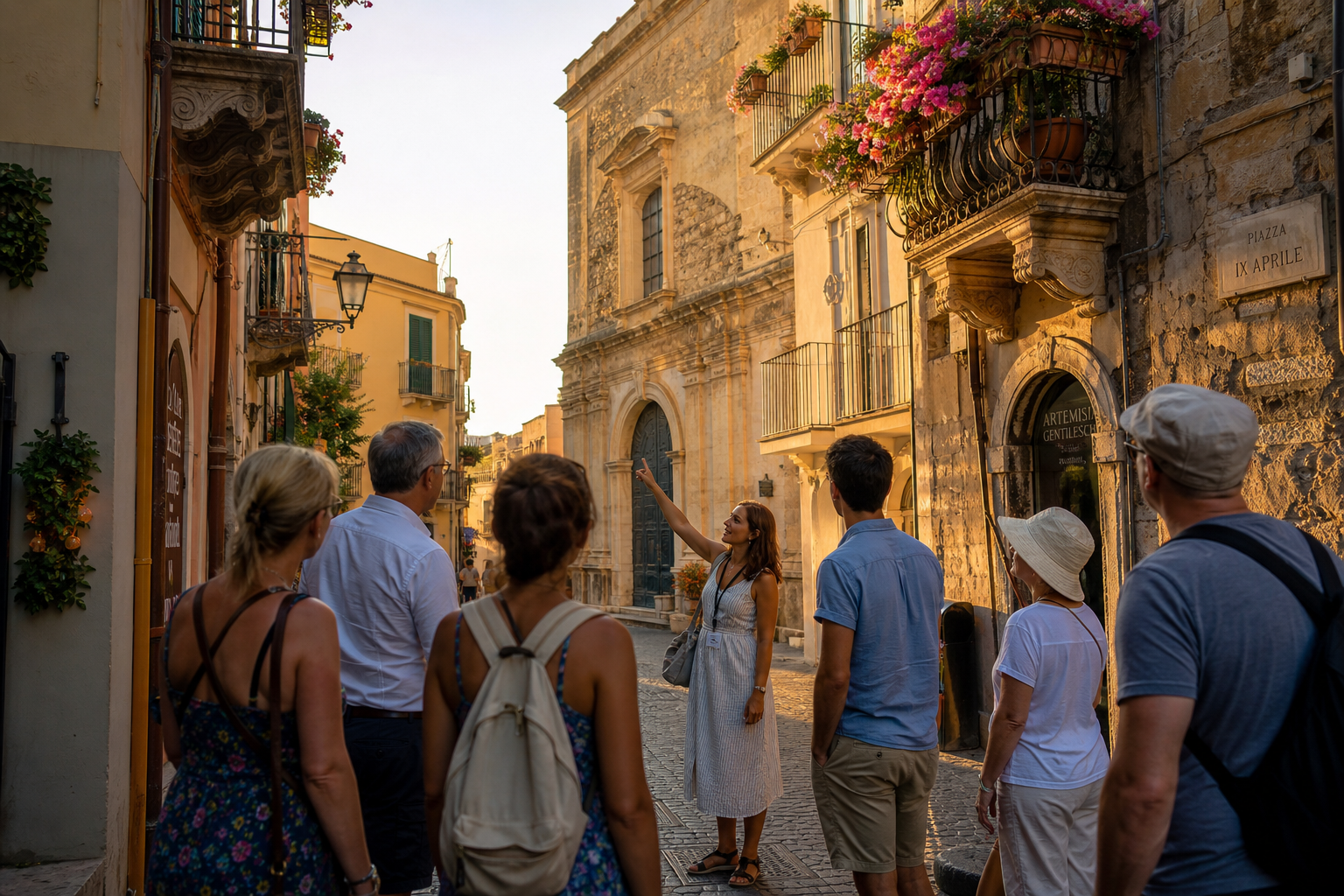
The hybrid nobody sells you
The best travellers rarely pick a side for a whole trip. They do their own transport and accommodation, then hire a guide only for the specific site that needs one.
That’s why on our Rome to Pompeii guide the recommendation for many people is “take the train, but book skip-the-line entry with a guide once you’re there.” You keep control of your day and your budget, and you pay for expertise only where it changes the experience. A guided core with independent days bolted on either side is usually cheaper and better than committing to one format.
Putting it to work
When the framework points to DIY — a clean train ride to a walkable town — book point-to-point tickets early and travel light. Across most of Europe you can compare fast and regional trains through Trainline in a single app, and booking two to four weeks ahead is where the real savings live.
When it points to guided — hard transfers, brutal queues, or a site that needs interpreting — a reputable day trip or excursion removes the parts you’d have paid for in time and stress anyway. Choose small-group over big-coach every time; a 40-seat bus is transport, not an experience.
This article contains affiliate links. If you book through them we may earn a small commission at no extra cost to you.
For the specific verdicts trip by trip, our best day trips from Rome piece applies this whole framework to real routes, and the full day trips hub collects every guide as we publish it. The framework is the point; memorise it and you’ll never overpay for a tour you didn’t need — or skimp on one you did.