 FlipTrip Team
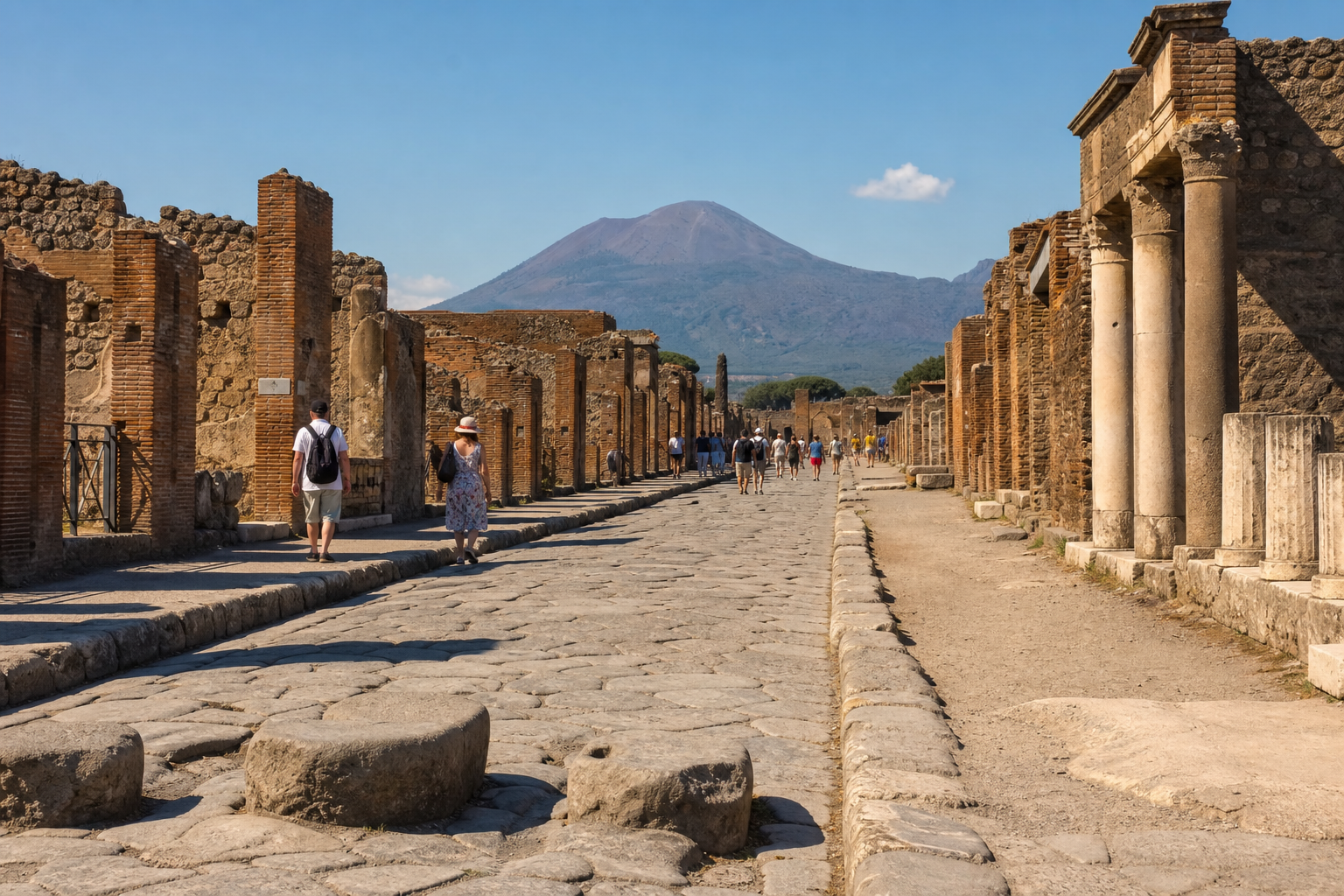
Pompeii sits about 240 km south of Rome, which sounds like a lot until you realise the high-speed train covers most of it in 70 minutes. It’s a genuine day trip — but a long one, and the part that trips people up isn’t the distance. It’s the second train, the one nobody warns you about, and the timed-entry ticket rules that changed for 2026.
We’ve done this run and priced both ways. The short version: DIY gives you control and more hours in the ruins, but for a first visit the guided tour is often cheaper and saves you from Pompeii’s biggest weakness — almost no signage on site. Here’s everything you need to choose.
The route, step by step
The independent journey has two legs, and the handoff between them is where people lose time.
Leg one — Rome to Naples. Take a Frecciarossa (Trenitalia) or Italo high-speed train from Roma Termini to Napoli Centrale. The ride is 1h07–1h15, and there are more than 50 departures a day, so you’re not chained to one train. Advance fares start at €14.90; book the day before and you’ll pay €35–50. First trains leave Rome around 06:00–07:40.
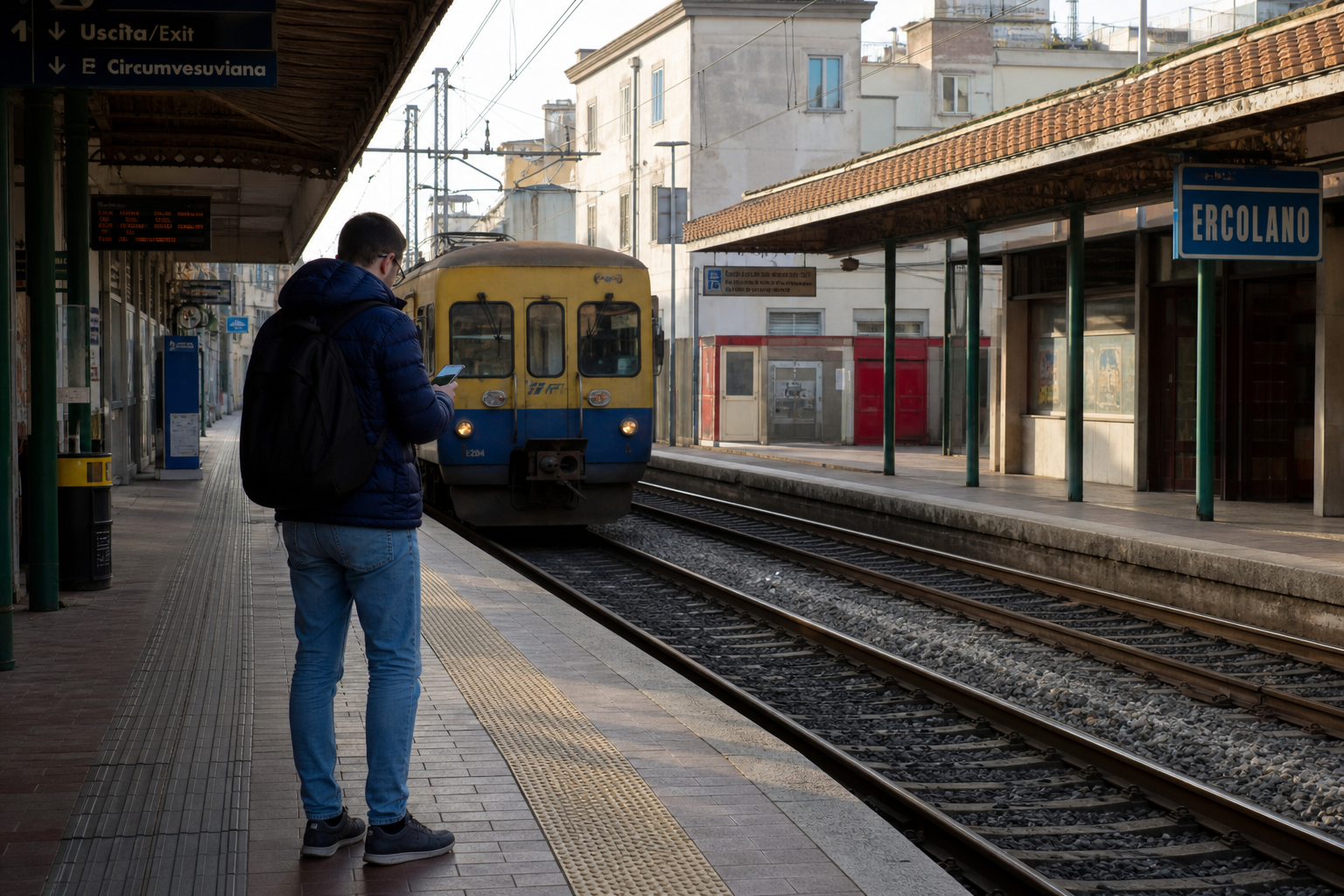
Leg two — Naples to Pompeii. At Napoli Centrale, follow the signs down to the Circumvesuviana, a separate regional railway on the lower level (the Garibaldi/Porta Nolana end). Take the Sorrento-line train to the stop called Pompei Scavi — Villa dei Misteri — this is the one right by the ancient site, not the modern town’s mainline “Pompei” station. The ride is about 35–40 minutes, trains run roughly every 30 minutes, and the fare is €3.30, bought at the ticket window or via contactless tap-and-go at enabled turnstiles.
From the Pompei Scavi platform it’s a five-minute walk to the Porta Marina entrance. Total door-to-door: around 2h10 each way.
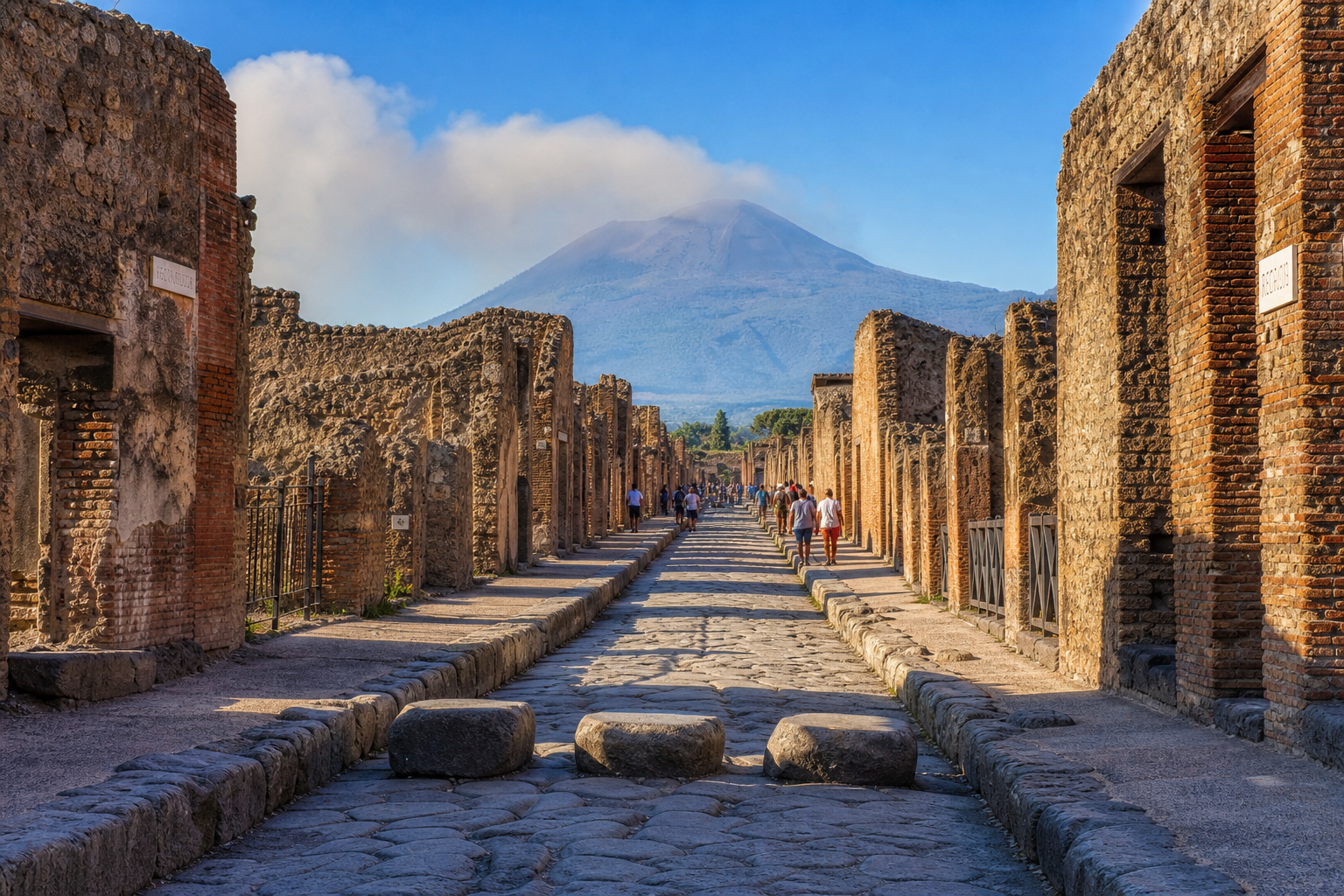
A couple of things worth knowing. The Circumvesuviana is old, can be crowded, and is occasionally unreliable — it’s the least polished part of the whole trip. In summer, Trenitalia also runs the more comfortable Campania Express tourist service on the same corridor for a higher fare, and there’s a direct Frecciarossa from Rome to Pompei on Sundays only. Check dates before you count on either.
What it actually costs to do yourself
Here’s the honest DIY sum for one person:
- Rome—Naples return, high-speed: roughly €30–90 depending on how far ahead you book
- Circumvesuviana return: about €6.60
- Pompeii entry: €18 for Pompeii Express (main site); €25 for Pompeii Plus (includes suburban villas). Reduced is €2 for EU citizens aged 18–25; under-18s free
- Optional on-site audioguide: about €6
Realistically, €78–118 per person all in, without a guide. Booking the fast train early is the single biggest lever — the difference between €14.90 and €44 each way is the difference between a cheap day and an expensive one.
The ticket rules that changed for 2026
Do not turn up and expect to buy a Pompeii ticket at the gate after a two-hour journey. From 2 March 2026, tickets for the Pompeii sites are sold exclusively through the official Vivaticket portal (linked from pompeiisites.org). Timed entry is mandatory from mid-March to mid-October, with a daily cap of 20,000 — split into 15,000 in the morning slot (9:00–13:00) and 5,000 in the afternoon (13:00–17:30). Buy your slot before you leave Rome.
Tickets are nominative, so carry photo ID that matches the name on the booking. One more quirk: a standard ticket allows a single entry — you can’t exit and come back on the same ticket. Pack water and plan to stay in.
Opening hours run roughly 09:00–19:00 in the summer season (last entry 17:30) and 09:00–17:00 in winter (last entry 15:30). Bag storage at the entrance is about €5 if you’re carrying more than a daypack.
The time budget (this is why people leave disappointed)
Pompeii is enormous. The highlights take 3–4 hours; a thorough visit is 5–6. Wrap that in two hours of travel each way and you’re looking at a 10–12 hour day from Rome. That’s fine if you plan for it and miserable if you don’t.
The move is to leave early. Aim for the 07:00–07:30 train from Termini, which gets you to Naples by around 08:15–08:45 and into Pompeii by 10:00 — before the coach tours arrive and before the midday heat, which is genuinely punishing on the exposed ancient streets in July and August. Then keep an eye on your return: high-speed trains in the 17:00–19:00 window fill up, so either pre-book a specific return or buy a flexible one-way out and grab your return from the machines at Napoli Centrale.
So is a guided tour worth it?
For a first visit, more often than you’d expect — and the reason is money as much as convenience.
A well-reviewed GetYourGuide coach tour from central Rome, with a licensed guide and skip-the-line entry, has been running around €54.50. That is less than the DIY transport-plus-entry total, and it includes the one thing Pompeii doesn’t give you for free: someone explaining what you’re standing in. The site has minimal in-situ signage, and plenty of independent visitors spend three hours unsure which building was the bakery and which was the brothel. A guide fixes that, skips you past the entry queue, and removes the flaky Circumvesuviana from your day entirely.
The catch is time on site. A coach tour typically gives you 2.5–3 hours in the ruins, sometimes less if it’s a combo day that also promises Sorrento or the Amalfi Coast. If Pompeii is your actual goal, avoid the tours that staple three other stops on — you’ll get 60–90 rushed minutes at the thing you came for.
Our verdict: book the guided tour if it’s your first visit, you want the context, and 3 hours on site is enough. Go DIY if you want 5+ hours to explore properly, plan to add Herculaneum, or simply prefer setting your own pace. There’s also a strong middle path — take the train yourself and book a skip-the-line ticket with an on-site guide once you arrive. That logic applies across most of these trips, which is why we broke it into a full guided-vs-DIY decision framework.
What to bring, and where to eat
A few practical things separate a good Pompeii day from a sunburnt, hungry one. There is almost no shade on the ancient streets, so bring a hat, sunscreen and more water than you think you need in summer; there are drinking fountains inside, but they are not always where you want them. Wear real shoes, because the original Roman paving is uneven and slick in spots, and the site is bigger than any map makes it look. A downloaded offline map or a site plan is worth having, since phone signal is patchy and, again, the on-site signage is thin.
Food is the other trap. The cafes right at the gates are mediocre and overpriced, aimed squarely at tour groups with 20 minutes to spare. If you are travelling independently and have the time, the smarter move is to eat in Naples on the way through, where the pizza is among the best in the world, or to carry a proper packed lunch from Rome and eat it near the amphitheatre. Do not plan your day around a memorable meal at the ruins, because there is not one to be had.
Booking it
If you’re going guided, choose a small-group Pompeii day trip from Rome with free cancellation, and check that it’s Pompeii-focused rather than a coast combo if the ruins are the point.
If you’re going DIY, book the Rome—Naples high-speed leg through Trainline two to four weeks out for the €14.90–20 fares, buy your Circumvesuviana ticket on arrival at Napoli Centrale, and lock your timed Pompeii entry on the official Vivaticket portal before you leave.
This article contains affiliate links. If you book through them we may earn a small commission at no extra cost to you.
Fit it into your Rome trip
Pompeii is one of several worthwhile escapes from the capital — see how it stacks up against Tivoli, Orvieto and the Amalfi Coast in our best day trips from Rome guide, and browse everything in the day trips hub. Before you go, our Rome city guides cover the metro, the food and where to base yourself, and the free create your own trip are a good way to fill the days you’re not heading south.
If you take one thing from this: book the fast train early, book the entry slot before you leave, and start before 07:30. Everything else about a Pompeii day is easy — it’s the timing that makes or breaks it.