 FlipTrip Team
The One-Bag Europe Packing Loadout: GaN Chargers, Packing Cubes & the Only 8 Tech Items You Need
Most one-bag packing lists are product dumps. Thirty items, no explanation of how they fit together, no acknowledgment that your bag has finite space and your outlets have finite ports. We’ve done enough trips through Europe to know that the gear you carry needs to function as a system — each piece earning its weight by solving a specific problem and, ideally, making something else in your bag work better.
This isn’t a list of nice-to-haves. It’s the eight tech items we carry on every European trip, chosen because they interlock. The charger powers the right devices at the right speeds. The packing cubes fit the exact dimensions of budget airline carry-on limits. The eSIM connects without eating your battery. Everything else got cut.
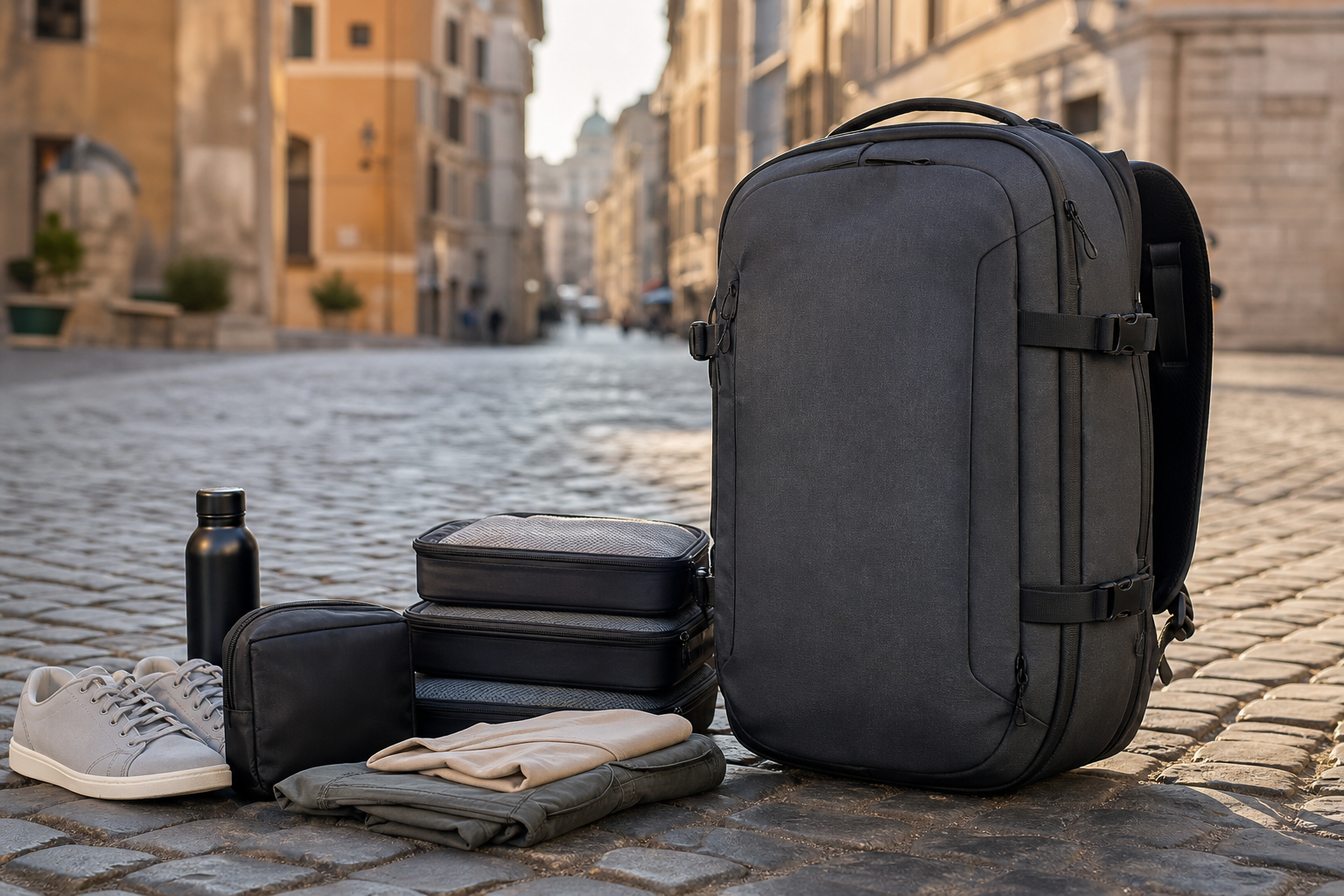
If you’re new to one-bag travel, the idea is simple: your entire trip — two weeks, three countries, whatever — fits in a single carry-on backpack. No checked bags, no luggage fees, no standing at carousels. Just you and a 40L bag walking straight out of the airport.
Here’s how we build the tech side of that loadout.
Why One-Bag for Europe in 2026 (Airline Rules Have Changed)
One-bag travel was always practical. In 2026, it’s also financial self-defense.
Budget airlines have been tightening carry-on restrictions for years, but the 2025–2026 changes made it a different game. Ryanair’s standard (non-priority) carry-on is now 40 — 20 — 25 cm — essentially a personal item. Wizz Air follows a similar model. Even legacy carriers like Lufthansa and Air France have started enforcing overhead bin dimensions more aggressively.
What this means practically: if your bag exceeds carry-on limits on a budget intra-Europe flight, you’re paying €30–60 for checked baggage. Do that across four flights in a two-week trip and you’ve spent €120–240 that could’ve been a nice dinner in every city.
The sweet spot we’ve found: a 40L travel backpack that compresses to meet personal-item dimensions when you need it to, and expands to full carry-on size on more generous airlines. The Osprey Farpoint 40, Aer Travel Pack 3, and Peak Design Travel Backpack 45L all hit this range. Your specific bag matters less than understanding the dimension constraints and packing to fit them.
Everything on this list was chosen to fit — both physically and electrically — within that constraint.
The Philosophy: A System, Not a Product Dump
Before we get to individual items, here’s the framework. Every tech item in your bag should answer at least one of these questions:
- Does it charge or power something else? If it doesn’t contribute to the power chain, it better be indispensable.
- Does it save space by replacing two things? A GaN charger that handles laptop and phone replaces two separate chargers plus a power strip.
- Does it solve a Europe-specific problem? EU outlet types, data roaming, language barriers — generic travel gear doesn’t always account for these.
- Can you survive without it? If the answer is yes, it stays home.
We apply this ruthlessly. The result is eight items, total weight under 900g, that handle power, organization, and connectivity for any European trip.
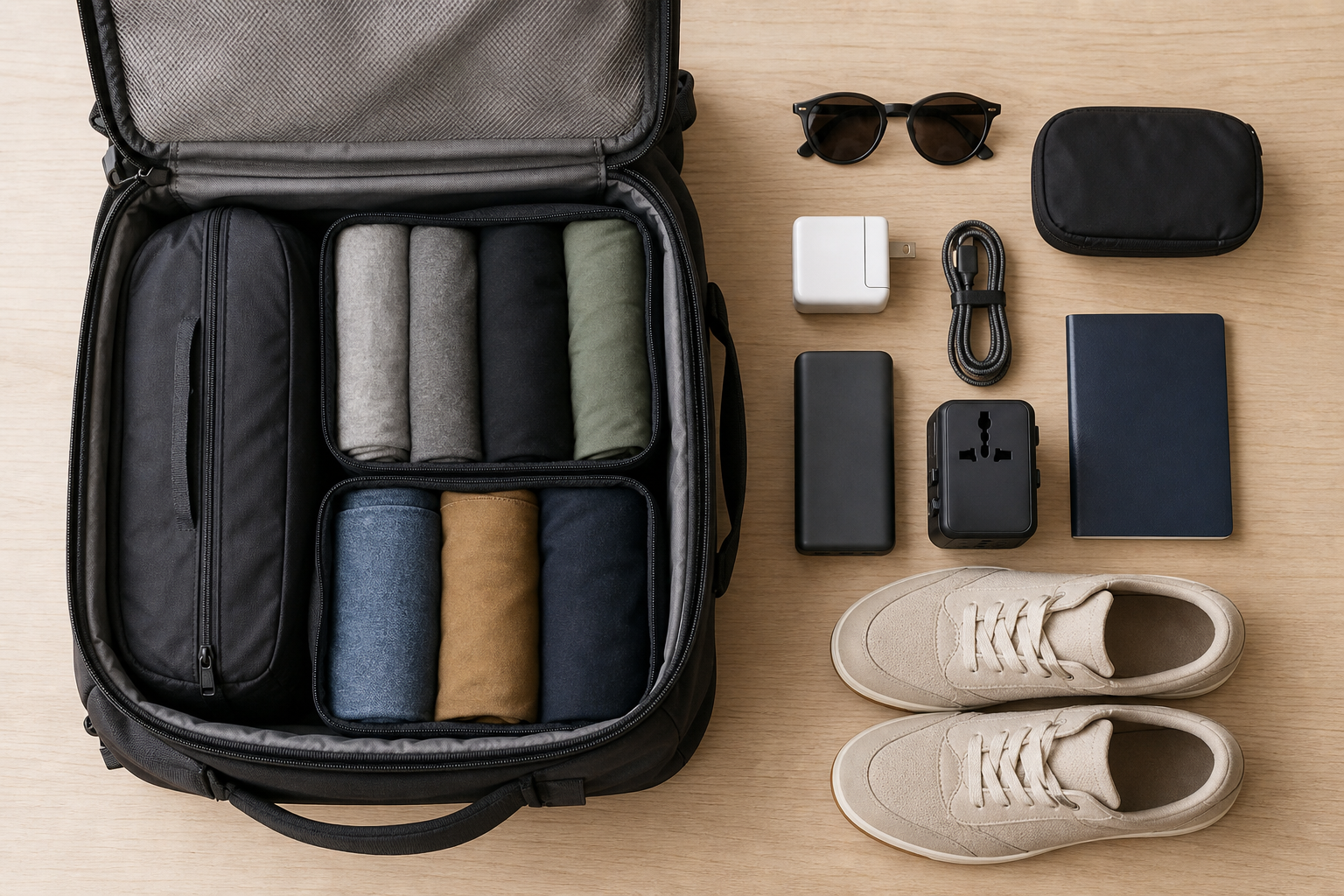
Power: GaN Charger + Universal Adapter + Power Bank
This is the foundation of the loadout. Get the power system right and everything else just works.
1. UGREEN Nexode Pro 65W 3-Port GaN Charger
This is the single most important tech item in the bag. One charger, three ports (2é USB-C, 1é USB-A), 65W total output. It replaces your laptop charger, phone charger, and any USB-A charging brick.
Why this specific charger for Europe:
- 65W on a single USB-C port charges a MacBook Air or most ultrabooks at full speed
- With two devices plugged in, it intelligently splits power: 45W to the laptop, 20W to the phone — both charging at usable speeds
- The USB-A port handles legacy devices (older Kindles, some power banks, hotel Bluetooth speakers you might borrow)
- At roughly 130g, it weighs less than most laptop-only chargers
- Built-in voltage switching handles 100–240V, so it works worldwide without a voltage converter
The wattage math matters. Many travelers buy a 30W charger and wonder why their laptop charges overnight while their phone sits at 40%. The 65W headroom means you can charge a laptop and phone simultaneously after a full day of walking tours without waiting until 2 AM for everything to top up.
Alternative: The Anker Prime 67W is slightly larger but has better thermal management if you tend to charge three devices at once. Check current prices on both — they trade positions on Amazon regularly.
2. TESSAN Universal Travel Adapter (Type C/G/A/I)
You need this and it’s not negotiable. Europe uses Type C (Europlug) and Type G (UK) outlets. A single universal adapter covers both, plus Type A (US) and Type I (Australia) for the rest of your potential travel.
What most people get wrong: They buy a bulky “all-in-one” adapter with a built-in USB charger. Skip that. You already have the UGREEN GaN charger for USB duties. You just need a clean, compact plug adapter that converts your charger’s prongs to the local outlet shape — nothing more.
The TESSAN compact adapter is roughly the size of a golf ball and weighs about 60g. It’s dead simple and doesn’t add bulk or unreliable USB ports you don’t need.
Country note: If your trip includes the UK, Ireland, Malta, or Cyprus, you need a Type G adapter. Most of continental Europe is Type C. The TESSAN handles both in a single unit.
3. Anker 622 MagGo 5000mAh Power Bank (or equivalent slim bank)
A 5000mAh power bank sounds small, and that’s intentional. It gives your phone roughly one full charge — enough to bridge the gap between leaving your Airbnb and getting back to an outlet.
Why not a bigger bank? Because weight and space. A 10,000mAh bank weighs 200g+ and takes up as much space as a pair of rolled socks. The 5000mAh bank weighs around 130g, slips into a jacket pocket, and handles the actual use case: you’re at 20% battery at 3 PM during a walking tour and need enough juice to get through the afternoon and navigate home.
If you’re a heavy phone user (lots of photos, GPS navigation all day, video calls), move up to a 10,000mAh bank like the Anker Nano. But for most travelers, 5000mAh is the sweet spot between weight and utility.
Total power system weight: approximately 320g. That’s your laptop charger, phone charger, outlet adapter, and emergency power bank in under a third of a kilogram.
Organization: Packing Cubes That Fit Carry-On Limits
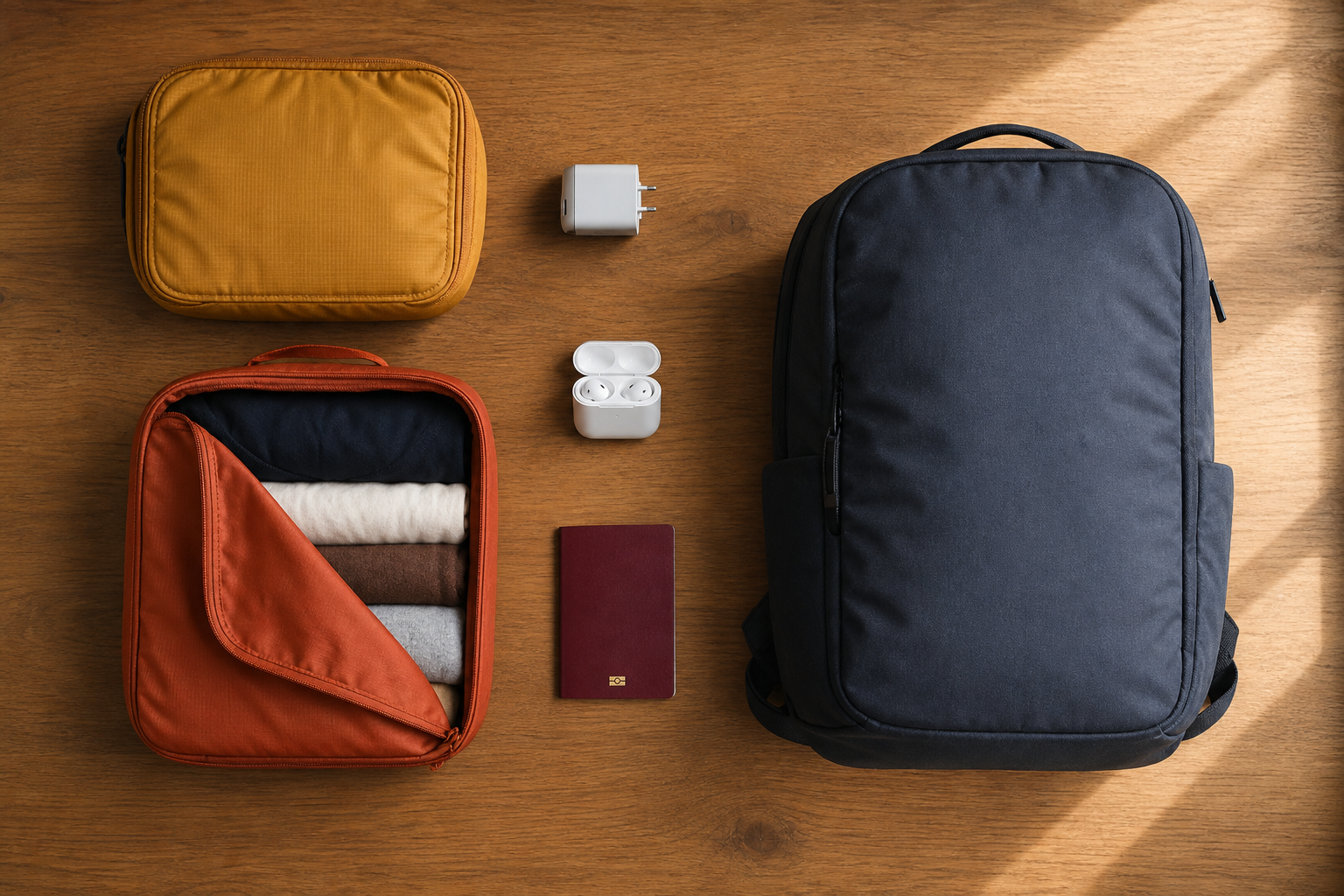
4. Peak Design Packing Cubes (Small + Medium)
Packing cubes aren’t strictly “tech,” but they’re the structural backbone of a one-bag system, and getting the dimensions wrong means your clothes eat into the space your tech needs.
Why Peak Design specifically:
- The small cube (dimensions roughly 26 — 18 — 8 cm compressed) is designed to stack alongside a laptop in a 40L bag without wasted space
- The medium cube handles 4–5 days of rolled clothing, which is the wash-cycle interval for most European trips
- The weatherproof zip means a wet swimsuit or rain-soaked shirt doesn’t contaminate the rest of your bag
- They compress meaningfully, which matters when you’re squeezing into Ryanair personal-item dimensions
The r/onebag consensus is split between Peak Design and Eagle Creek Pack-It Reveal. Eagle Creek is cheaper and lighter; Peak Design is more durable and compresses better. Either works. What doesn’t work is packing without cubes — loose clothing shifts in transit and eats 20–30% more space than cubed clothing.
Pro tip: Pack one cube for your “walking around” clothes and one for your “everything else” (sleep clothes, swimsuit, spare layer). This makes repacking at each destination take two minutes instead of fifteen.
UGREEN Nexode Pro 65W GaN Charger
Powers laptop + phone + earbuds at once. Tiny. Our #1 travel charger.
Connectivity: eSIM + Offline Maps + VPN
5. Airalo eSIM (Europe Regional Plan)
Physical SIM cards are dead for European travel. An eSIM gives you a data plan before you land, without hunting for a Vodafone shop at arrivals.
Why Airalo for Europe:
- The Europe regional eSIM covers 39 countries on a single plan — no switching SIMs between France, Italy, and Portugal
- Activate it before you leave home and it’s live the moment your plane touches down
- 5GB for 30 days costs roughly what a single airport SIM costs in most European countries
- No contract, no physical card to lose, no tray-ejector tool to carry
The important caveat: eSIMs are data-only. You won’t have a local phone number for calls or SMS. This is fine for 95% of travel — WhatsApp, Maps, and browser all work over data. If you need to make local calls (booking restaurants, calling taxis in smaller towns), use WhatsApp voice calls or download Skype credit.
Connectivity tip: Download offline maps for every city on your itinerary before you leave. Google Maps and Apple Maps both support offline regions. This means your eSIM data goes toward messaging and browsing, not map tiles.
6. NordVPN (or Similar Trusted VPN)
A VPN is the tech item most travelers skip until they need it. Then they’re sitting in a café in Rome trying to access their bank account and getting blocked because the IP is flagged as foreign.
Why you actually need this in Europe:
- Access your home-country banking apps and streaming services without geo-blocks
- Secure your connection on hostel and café Wi-Fi (which is often unencrypted)
- Some EU countries throttle or restrict certain services — a VPN sidesteps this cleanly
NordVPN is the recommendation because it consistently works in European countries that actively block VPN traffic, has servers in every EU country (meaning fast local connections), and has a lightweight mobile app that doesn’t destroy battery life.
Download and configure it before your trip. Trying to set up a VPN on airport Wi-Fi is an exercise in frustration.
7. Portable Cable Kit (2 Cables, 1 Wrap)
This sounds trivial but the wrong cables create genuine friction.
What to carry:
- One USB-C to USB-C cable (1m length) — charges your phone from the GaN charger at full speed, and handles laptop charging
- One USB-C to Lightning or USB-C cable (0.3m short) — for your secondary device (earbuds case, Kindle, etc.)
- One Velcro cable wrap — keeps everything untangled in your bag
Why only two cables: Because the UGREEN 65W charger has USB-C and USB-A ports, and virtually every modern device charges via USB-C. If you still have a Lightning device, bring one short Lightning cable. That’s it. If you find yourself carrying four or five cables, you’re carrying redundant ones.
Cable quality matters. A cheap cable that only supports 5W charging defeats the purpose of a 65W charger. Make sure your USB-C cable supports at least 60W power delivery. Anker and UGREEN both make reliable options.
8. AirPods Pro or Similar ANC Earbuds
Active noise cancellation isn’t a luxury on European budget airlines — it’s a survival tool. Ryanair cabin noise at cruising altitude is genuinely punishing, and a two-hour flight across Europe is bearable with ANC and unbearable without it.
Beyond flights, they solve European travel problems:
- Noise cancellation in hostels and thin-walled Airbnbs
- Transparency mode for walking tours where you need to hear a guide while blocking traffic noise
- Compact enough to carry in a pocket all day (over-ear headphones are not)
- Built-in mic for WhatsApp calls (replacing the need for a phone call plan)
AirPods Pro are the default if you’re in the Apple ecosystem. For Android, the Sony WF-1000XM5 or Samsung Galaxy Buds3 Pro are equivalent. What matters is ANC quality and case size — you’ll carry these every day.
The Full Loadout: Complete Checklist
Here’s everything in one place, with approximate weights:
| # | Item | Weight | Role |
|---|---|---|---|
| 1 | UGREEN Nexode Pro 65W GaN Charger | ~130g | Charges all devices |
| 2 | TESSAN Universal Travel Adapter | ~60g | Plug compatibility |
| 3 | Anker 622 MagGo 5000mAh Power Bank | ~130g | Emergency phone charge |
| 4 | Peak Design Packing Cubes (S+M) | ~180g | Clothing organization |
| 5 | Airalo eSIM | 0g | Data connectivity |
| 6 | NordVPN subscription | 0g | Security + geo-access |
| 7 | Cable kit (2 cables + wrap) | ~60g | Charging connections |
| 8 | ANC Earbuds + case | ~55g | Noise + calls |
Total tech weight: approximately 615g.
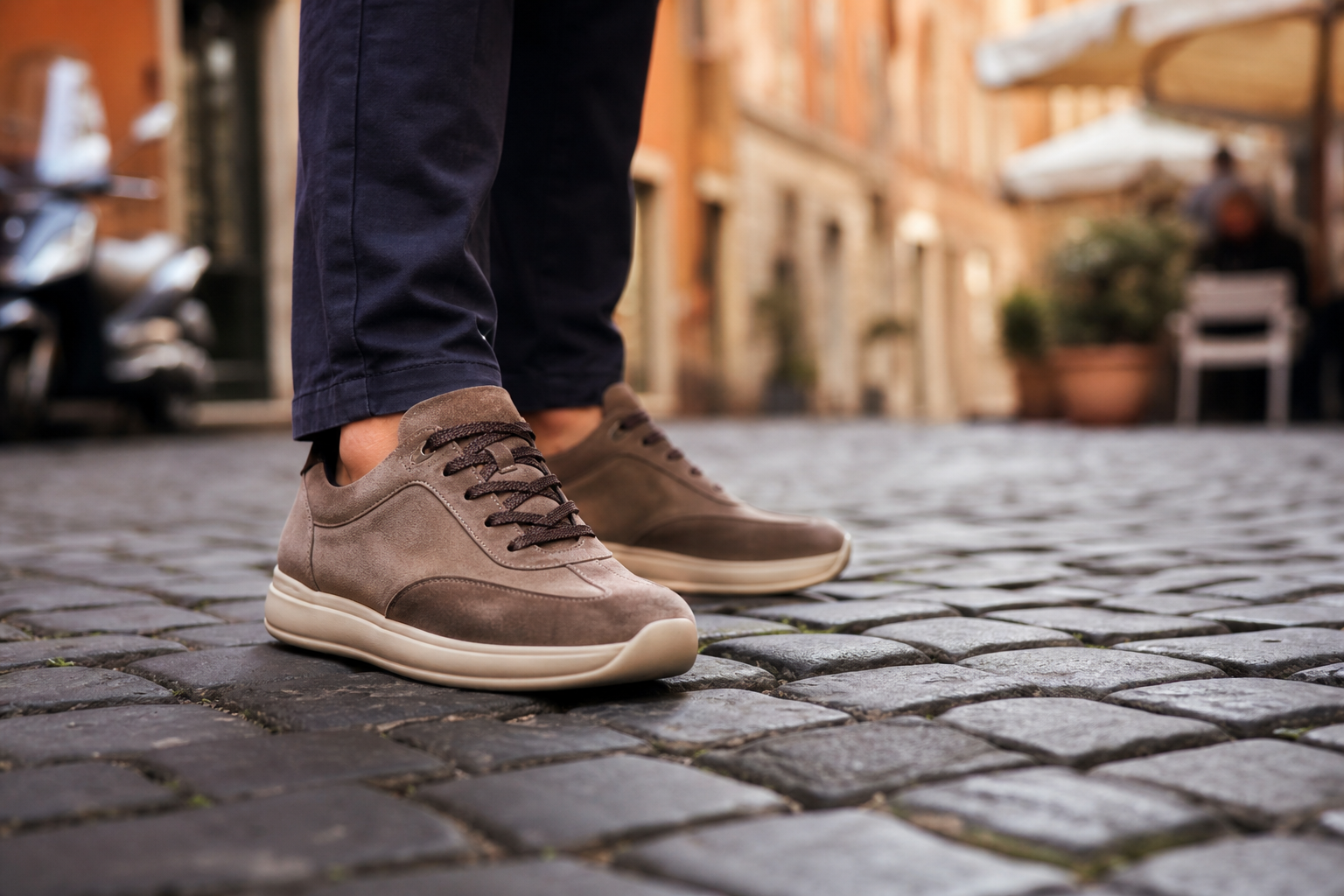
That’s under 700g for your complete power, connectivity, and organization system. The rest of your bag’s weight budget goes to clothing, toiletries, and the walking shoes you picked from our cobblestone guide.
What We Left Out (And Why)
Cutting items is harder than adding them. Here’s what didn’t make the loadout and why.
Laptop. Unless you’re working remotely, leave it. Your phone handles email, maps, booking confirmations, and entertainment. A laptop adds 1–1.5 kg and demands its own sleeve space. If you must bring one, the MacBook Air or a comparable ultrabook is the only defensible choice — anything heavier isn’t worth the pack space.
Portable Bluetooth speaker. Fun at the beach, dead weight in European cities. You’ll spend evenings at restaurants and bars, not in your hotel room. Leave it.
Camera (dedicated). Controversial take, but modern phone cameras — particularly the iPhone 16 Pro and Pixel 9 Pro — produce photos indistinguishable from mirrorless cameras for travel purposes. A dedicated camera adds 400–800g plus a lens, charging gear, and storage cards. Unless photography is a primary goal of your trip, the phone wins.
Power strip / multi-outlet adapter. Unnecessary if you have the 3-port GaN charger. One charger + one adapter handles three devices simultaneously. A power strip adds weight, bulk, and another thing to forget in a hotel room.
Physical guidebook. This is 2026. Download offline guides, save maps, use translation apps. A Lonely Planet weighs 350g and contains information that’s outdated before it’s printed.
Drone. EU drone regulations require registration, insurance, and compliance with country-specific no-fly zones. Unless you’re a licensed pilot who has pre-filed flight plans, the hassle-to-value ratio is terrible. Leave it.
The principle is simple: if an item doesn’t solve a problem you’ll encounter on most travel days, it’s not essential. Pack it only if you have specific plans that require it.
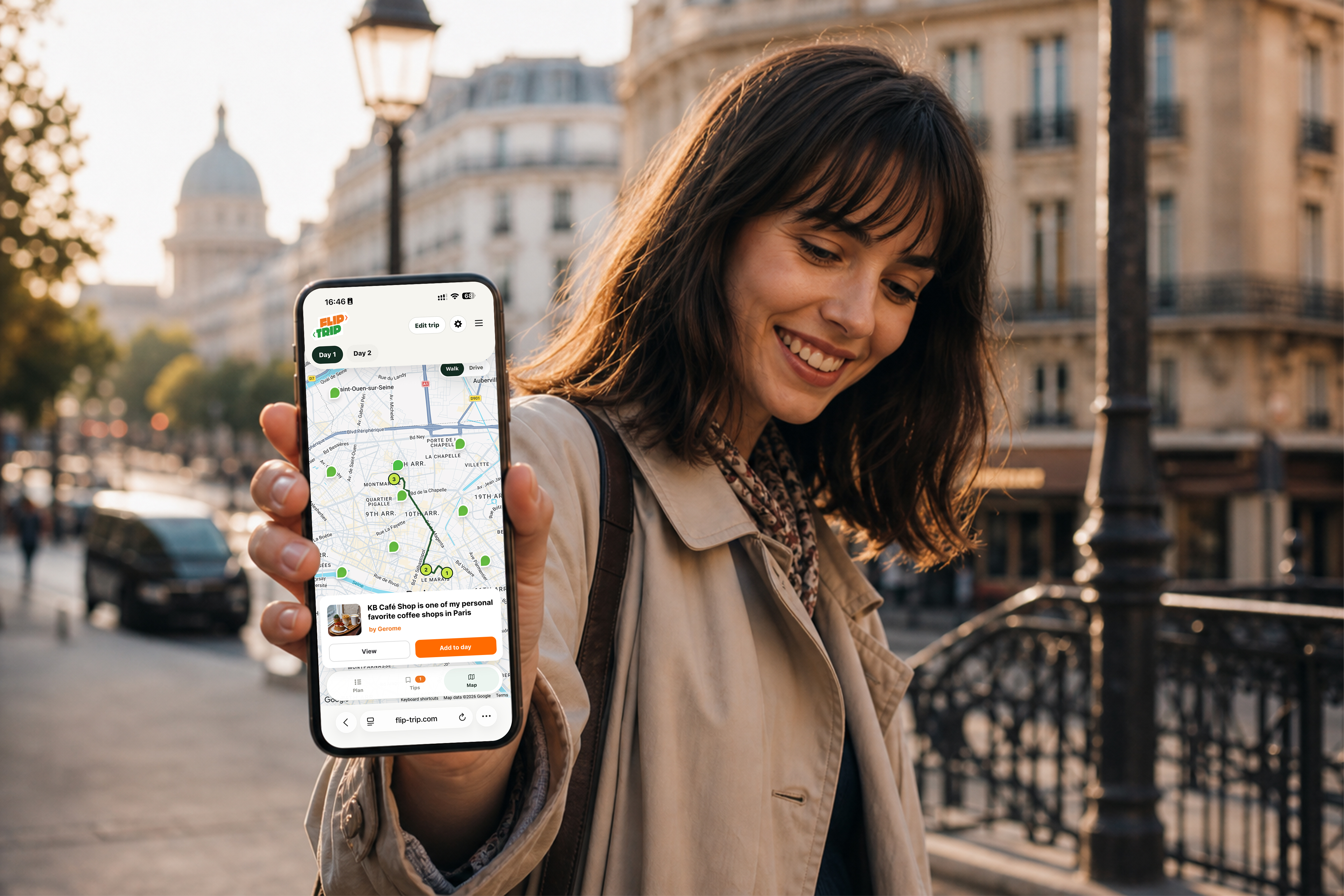
Your bag is packed. Your tech is sorted. Now go walk 20 km on cobblestones in create your own trip or create your own trip with FlipTrip’s free walking tours — and you’ll be glad the only thing weighing you down is a 615g tech kit instead of a rolling suitcase.
Disclosure: This article contains Amazon Associates and NordVPN affiliate links. We earn a small commission if you purchase through them — at no extra cost to you. We only recommend products we carry ourselves or that are consistently top-rated by the r/onebag community.