 FlipTrip Team
The Best Walking Shoes for Cobblestone Streets in Europe (Tested Across Rome, Paris & Lisbon)
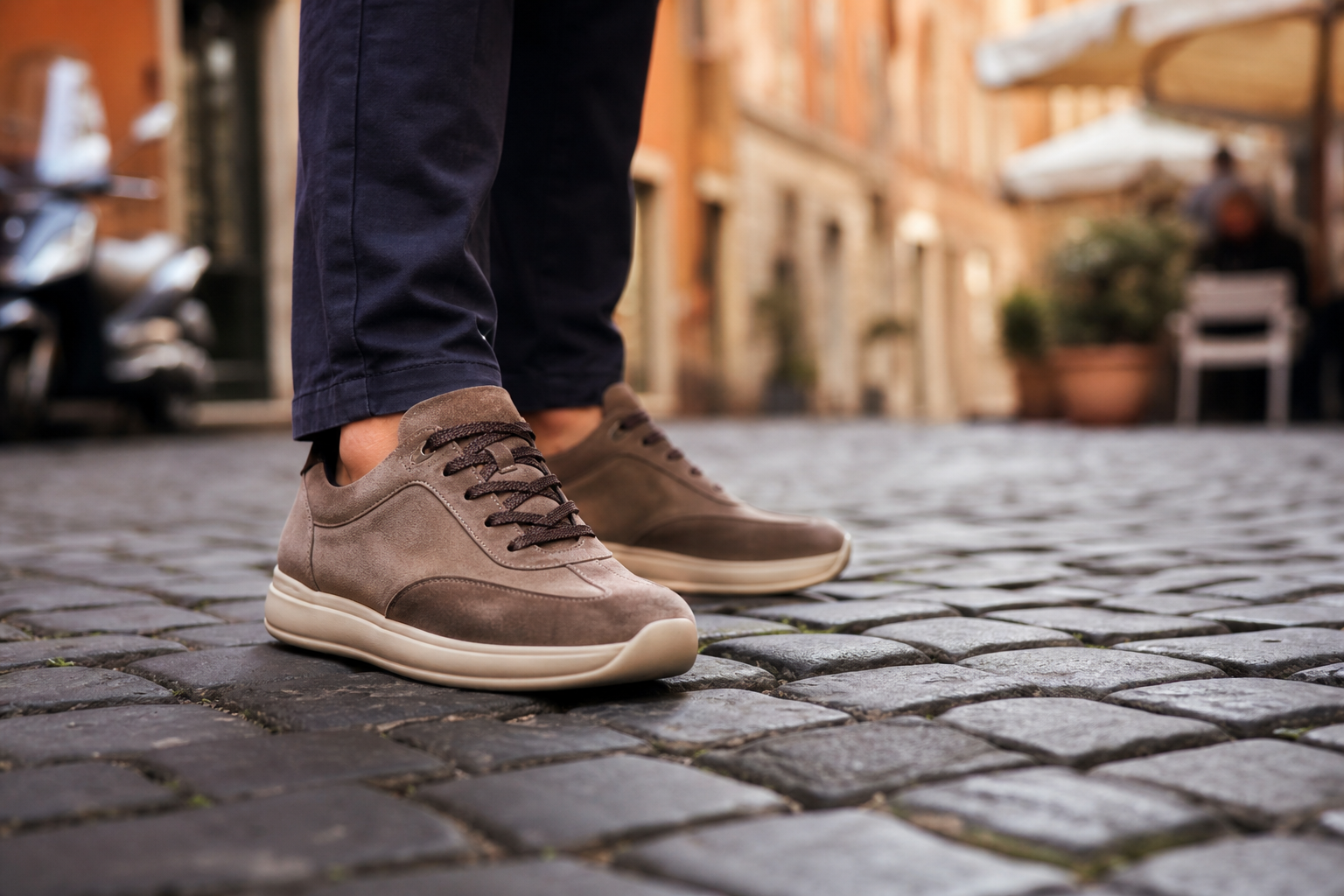
Here’s the thing nobody tells you before your first European trip: the cobblestones will wreck your feet. Not in a blisters-by-day-two way (though that happens too), but in a deep, dull ache through your arches and ankles that compounds every single day of a two-week itinerary. We learned this the hard way, and we’ve spent the past year pressure-testing shoes across three of the hardest cities for footwear in Europe.
Your running shoes won’t cut it. Your fashion sneakers definitely won’t. And those “travel shoes” marketed on Instagram? Most of them are designed for airport floors, not 800-year-old basalt blocks set at uneven angles.
We put together this guide after walking FlipTrip tour routes across Rome, Paris, and Lisbon — cities that each throw a completely different type of cobblestone at your feet. These picks are community-tested, forum-vetted, and chosen specifically for the surfaces you’ll actually encounter in Europe.
Why Cobblestones Demand Specific Shoes
Not all cobblestones are created equal, and that’s exactly why your trusty Nikes from back home fall short.
Roman sampietrini are small, cube-shaped basalt stones with deep grooves between them. They’re slightly convex on top and notoriously slippery when wet. Walking across Piazza Navona in the rain feels like navigating a field of polished river rocks. Your foot needs lateral stability and a sole that can grip irregular surfaces without catching on gaps.
Parisian sidewalks are a mix of flat limestone blocks, patchy asphalt, and occasional cobbled side streets. The challenge here isn’t the cobbles themselves — it’s the volume. You’ll walk 18–25 km on a full day in Paris, and the unevenness is constant but subtle. Cushioning matters more here than aggressive tread.
Lisbon’s calçada portuguesa is the boss fight. Those beautiful black-and-white limestone mosaic sidewalks look gorgeous in photos and become skating rinks when damp. They’re also steeply inclined across half the city. You need grip, ankle support, and a sole that doesn’t compress after sustained hill walking.
The upshot: a good European walking shoe needs three things that most sneakers skip — lateral stability for uneven surfaces, wet-weather grip on polished stone, and enough cushioning to survive 15–20 km days without bottoming out.
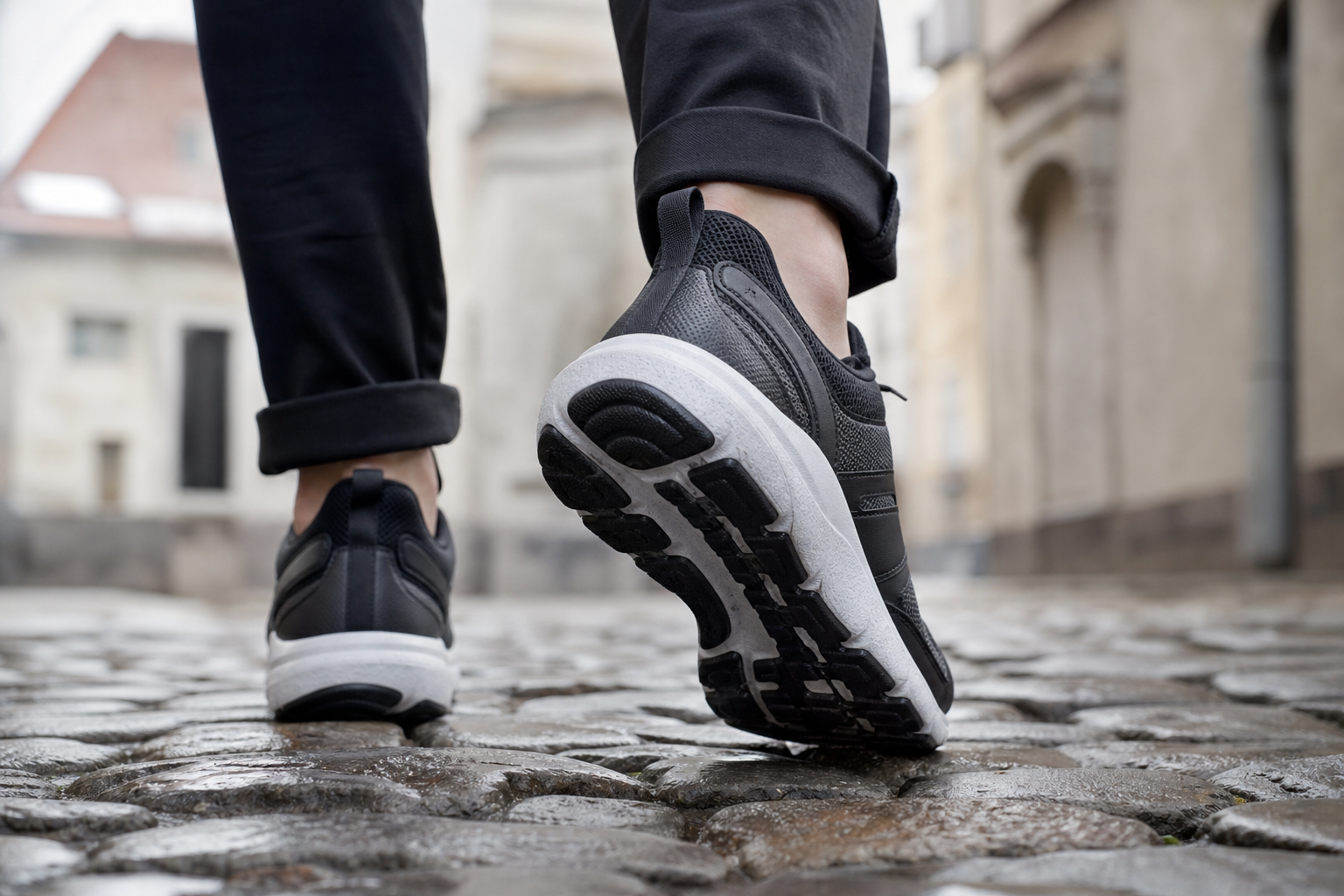
How We Tested: 3 Cities, 4 Surface Types
We didn’t test these in a lab or on a treadmill. We tested them on the actual surfaces you’ll walk during a European trip.
The surfaces:
- Roman sampietrini (basalt cubes, uneven gaps)
- Parisian mixed sidewalks (limestone, asphalt patches, cobbled courtyards)
- Lisbon calçada (polished limestone mosaic, steep grades)
- Museum/indoor floors (marble, tile — because you’ll spend hours on these too)
What we measured:
- Comfort after 20,000+ step days
- Wet grip on polished stone (tested during actual rain — not hard to find in Lisbon)
- Arch support degradation over multi-day use
- Weight and packability (because these need to fit in your carry-on)
- Break-in period (some shoes need 50 km before they stop hurting)
We also pulled heavily from the r/onebag and r/travel communities, where thousands of travelers have reported back on what actually held up across European cobblestones. When we recommend something, it’s backed by both our testing and community consensus.
Best Overall: Our Top Pick for Mixed Cobblestones
Hoka Clifton 10
This has become the default recommendation across travel forums for a reason. The Clifton 10’s meta-rocker geometry — that curved sole profile — is purpose-built for rolling through uneven surfaces. On Roman sampietrini, the rocker lets your foot transition smoothly across the gaps instead of catching on individual stones.
Why it works for Europe specifically:
- The extended heel crash pad absorbs the constant micro-impacts from irregular surfaces
- Lighter than most stability shoes at around 250g (men’s), which matters when you’re packing one bag
- Wide enough toe box to let your feet swell during long days (and they will swell)
- The rubber outsole handles wet limestone reasonably well, though it’s not the grippiest option on this list
Where it falls short: The Clifton isn’t a support shoe. If you pronate heavily, the cushioning can feel unstable on steep Lisbon hills. And the knit upper picks up water quickly — fine in Rome, less ideal in a Lisbon downpour.
Who it’s for: The traveler walking 15–20 km a day across mixed surfaces who values cushioning over ankle stability. If you’re doing our create your own trip or spending full days on your feet in Paris, this is the pick.
Hoka Clifton 9
Our top pick for all-day walking on Roman sampietrini. Max cushion, minimal weight.
Best for All-Day Walking Tours
New Balance Fresh Foam X 880v14
When your itinerary is “walk from 8 AM to 9 PM with a lunch break,” you need a shoe that doesn’t degrade. The 880 has been the workhorse recommendation from long-distance walkers for generations, and the v14 finally addressed the two complaints travelers had: it’s lighter and the outsole rubber is stickier.
Why it works for Europe specifically:
- Fresh Foam X midsole maintains cushioning past the 25 km mark — critical for multi-day trips
- Ndurance rubber outsole is genuinely good on wet surfaces, better than the Hoka in rain
- Comes in wide and extra-wide options, which matters enormously (more on that in the women’s section)
- Structured enough for mild-to-moderate pronation without being a full stability shoe
Where it falls short: It’s not as light as the Clifton (roughly 290g men’s), and it’s bulkier to pack. The silhouette also reads more “athletic shoe” than “travel shoe” — not that this matters functionally, but some travelers prefer something that works with jeans at dinner.
Who it’s for: Travelers who prioritize durability over weight. If you’re doing 10+ days and want one shoe that won’t lose cushioning by day eight, this is the move.
Best Budget Option Under €100
Saucony Ride 17
The Ride series has always been Saucony’s value play, and the 17 hits a sweet spot for European travel. It’s not the lightest, not the most cushioned, not the grippiest — but it does everything at a 70–80% level, which is enough for most two-week trips.
Why it works for Europe specifically:
- PWRRUN foam is decent on cobblestones — not as plush as Hoka’s but it doesn’t bottom out
- The outsole rubber handles wet stone better than you’d expect at this price
- At roughly 275g, it’s a reasonable pack weight
- Widely available in Europe if you need to replace mid-trip
Where it falls short: Arch support is minimal. If you have flat feet or high arches, you’ll want aftermarket insoles (covered below). The toe box is also slightly narrow, which can be an issue during long walking days when your feet swell.
Who it’s for: First-time European travelers who don’t want to invest €170+ before knowing if they’ll even need dedicated walking shoes. Check current price on Amazon — the Ride series frequently goes on sale when new versions release.
Best for Women (Narrower Fit, Same Support)
This section exists because the r/travel and r/onebag communities are full of women reporting that “women’s versions” of popular walking shoes are just scaled-down men’s lasts with pink colorways — and they fit terribly.
ASICS Gel-Kayano 31 (Women’s)
The Kayano is one of the few shoes where the women’s version is built on an actually different last. The heel cup is narrower, the midfoot is proportionally adjusted, and the arch placement reflects typical women’s foot geometry. This matters enormously on cobblestones, where a sloppy heel fit means constant micro-adjustments and blisters.
Why it works for Europe specifically:
- 4D Guidance System provides medial support without feeling like a brick — great for Lisbon’s lateral-grade sidewalks
- FF Blast Plus cushioning doesn’t compress as quickly as foam-only midsoles
- The GEL units in the heel genuinely help with the jarring, repetitive impact of sampietrini walking
- PureGEL technology in the forefoot keeps your toes from going numb on long museum floors
Where it falls short: It’s heavier than the other picks here (around 270g women’s), and the price point is on the higher end. It’s also a stability shoe, so if you have neutral gait, you might find the medial post intrusive.
Alternative worth considering: The Brooks Adrenaline GTS 24 is another women’s-specific option with excellent cobblestone feedback, especially for wider feet. It’s slightly more flexible than the Kayano, which some prefer for uneven surfaces.
Who it’s for: Women who’ve struggled with “unisex” or poorly adapted walking shoes and want something built for their actual foot shape. If you’ve had heel slippage or ball-of-foot pain on previous European trips, start here.
Insoles, Socks, and Blister Prevention Tips
The right shoe solves 70% of the cobblestone problem. The other 30% comes down to what’s inside it.
Insoles
If your shoe has removable insoles (most on this list do), consider swapping them for Superfeet Green or Superfeet All-Purpose Support. They add structure to the arch without changing the way the shoe fits. For flat feet specifically, the Superfeet Blue provides more aggressive arch fill without making the shoe feel too tight.
Don’t bother with gel insoles. They compress within 48 hours of heavy walking and then you’re worse off than stock insoles.
Socks
Merino wool. That’s it. That’s the recommendation.
Darn Tough Hiker Micro Crew or Smartwool Hike Light Cushion are the two that come up repeatedly in travel forums, and for good reason. Merino manages moisture, doesn’t stink after multi-day wear (important when you’re packing light), and provides just enough cushion to buffer cobblestone impacts without making your shoes too tight.
Cotton socks on cobblestones are a blister guarantee. Synthetic athletic socks are fine for one day but start to smell and lose cushioning properties quickly.
Blister prevention
- Break in your shoes for at least 80 km before your trip. This means wearing them daily for two to three weeks. Don’t show up in Rome with fresh-out-of-the-box shoes.
- Apply BodyGlide or a similar anti-chafe balm to hotspots (back of heel, ball of foot, pinky toe) every morning.
- Carry Leukotape P in your daypack. It’s superior to moleskin for mid-day blister treatment — it sticks to sweaty skin and doesn’t shift.
- Change socks midday if you’re doing 20+ km. Carry a second pair in your bag.
What to Avoid: Shoes That Failed on Cobblestones
We’re not going to name every shoe that didn’t work, but there are patterns worth calling out.
Flat-soled minimalist shoes (Allbirds Wool Runners, Vivo Barefoot, most “zero drop” shoes): These might be great on smooth surfaces, but on cobblestones they transmit every impact directly into your feet. After 15 km on Roman sampietrini, the fatigue is noticeable. Minimalist shoes also provide zero lateral support, which becomes a problem on Lisbon’s canted sidewalks.
Fashion sneakers with thin rubber outsoles (Converse, Vans Old Skool, Stan Smiths): The outsoles are too thin and too smooth. They wear out in days on basalt, and wet calçada is genuinely dangerous in these.
“Travel shoes” with collapsible heels (various brands market fold-flat shoes for packing): These sacrifice structure for packability, and it’s not a worthwhile trade. Your feet don’t care that the shoe packs flat if it provides no arch support after kilometer eight.
Hiking boots (unless you’re actually hiking): Overkill for city walking. They’re heavy, they’re hot, and the aggressive tread catches on cobblestone gaps. Unless your itinerary includes serious trails, leave them home and save the pack space.
Leather-soled dress shoes: This should be obvious, but polished leather on wet cobblestones is a fall waiting to happen. If you need a nicer shoe for dinner, pack a light pair of leather-upper shoes with rubber outsoles — something like the Cole Haan ériginalGrand is a reasonable compromise.
Putting It All Together
Here’s our quick-reference matrix based on how you travel:
Walking 10–15 km/day, mixed itinerary ? Hoka Clifton 10. Best balance of cushioning and weight for typical tourist days.
Walking 20+ km/day, marathon sightseeing ? New Balance 880v14. Won’t degrade over a long trip.
Budget-conscious, first big Europe trip ? Saucony Ride 17. Does everything well enough, half the price.
Women who’ve struggled with fit ? ASICS Gel-Kayano 31 Women’s. Actually built for women’s feet, excellent on cobblestones.
Whatever you pick, break them in before you go. Swap the insoles if the stock ones are flat. Wear merino socks. And pack Leukotape.
You’ll be walking 15–20 km a day on FlipTrip’s create your own trip and create your own trip — that’s the kind of mileage where shoe choice isn’t vanity, it’s survival. Get this decision right and every other part of the trip gets better.
Looking for the rest of your travel kit? Check out our one-bag Europe packing list for the tech essentials that complement these shoes.
Disclosure: Some product links in this article are Amazon Associates links. We earn a small commission if you purchase through them — at no extra cost to you. We only recommend gear we’ve tested or that’s consistently validated by the travel community.