 FlipTrip Team

MAIF Ekiden de Paris 2026: Running a Team Marathon Along the Seine
If you have ever watched a major marathon and thought I could do a slice of that, but my friends would actually join — the MAIF Ekiden de Paris is the race built for you. It is France’s flagship ekiden: a Japanese-style team relay that adds up to a full marathon distance, run in six legs along the Seine with the Eiffel Tower in sight and a finish-line atmosphere that feels more festival than funnel.
The 2026 edition is set for Sunday, November 1, with registration already open on the official site. Past editions have sold out well before race day — 2025 was full more than a month out — so if you are planning a Paris trip around this event, treat the team entry as your anchor booking, not an afterthought.
This guide covers the format, logistics for visitors, and how to spend the rest of the weekend exploring Paris without wrecking your legs before the gun goes off.
What Is an Ekiden — and Why Paris?
An ekiden is a long-distance relay born in Japan. Instead of one runner covering 42.195 km, a team splits the distance. The MAIF Ekiden de Paris is organized by the Federation Francaise d’Athletisme (FFA), title partner MAIF, and the Mairie de Paris, and carries the FFA’s national label — meaning results can count toward French club rankings and qualification paths for national championships.
That pedigree matters if you are a serious club runner. For everyone else, it matters because the event is professionally run: chip timing, dedicated relay zones, medical cover, and a course closed to traffic along one of the most photogenic stretches of river in Europe.
The 2025 edition made headlines when Kenya’s 42House became the first team under two hours on French soil (1:58:05, pending homologation), and a French senior men’s record fell in the same race. You will not need that pace to enjoy the day — but it signals the caliber at the front.

MAIF Ekiden 2026: Key Dates and Format
| Detail | Information |
|---|---|
| Race day | Sunday 1 November 2026, start 9:00 |
| Distance | 42.195 km total (marathon distance) |
| Team size | 6 runners (standard ekiden) |
| Leg distances | 5 km, 10 km, 5 km, 10 km, 5 km, 7.195 km |
| Organizers | FFA, MAIF, Ville de Paris |
| Capacity | 1,600+ teams expected (2026 messaging on official site) |
There is also a three-runner format on the same course for smaller squads — check the current registration page for which categories are open when you apply, as formats can fill at different speeds.
Registration: Opens via maif-ekiden-paris.fr/inscriptions. Early-bird offers for the first teams have appeared in past years — worth monitoring if you are organizing a club trip.
Bib pickup: Typically the Saturday before the race (for 2026, expect Saturday 31 October), often 13:00 to 18:00 at the Gymnase Emile Anthoine area (Place de Sydney, 15th arrondissement). Confirm exact hours on the official site closer to the date — they publish a dedicated “Retrait des dossards” section each autumn.
The Course: Seine Quays and Eiffel Tower Views
The start and finish anchor around Quai Jacques Chirac, with the event village historically centered near Stade Emile-Anthoine in the 15th. Runners follow closed roads along the Left Bank Seine quays — think flat, fast road surfaces with river on one side and Haussmann Paris on the other.
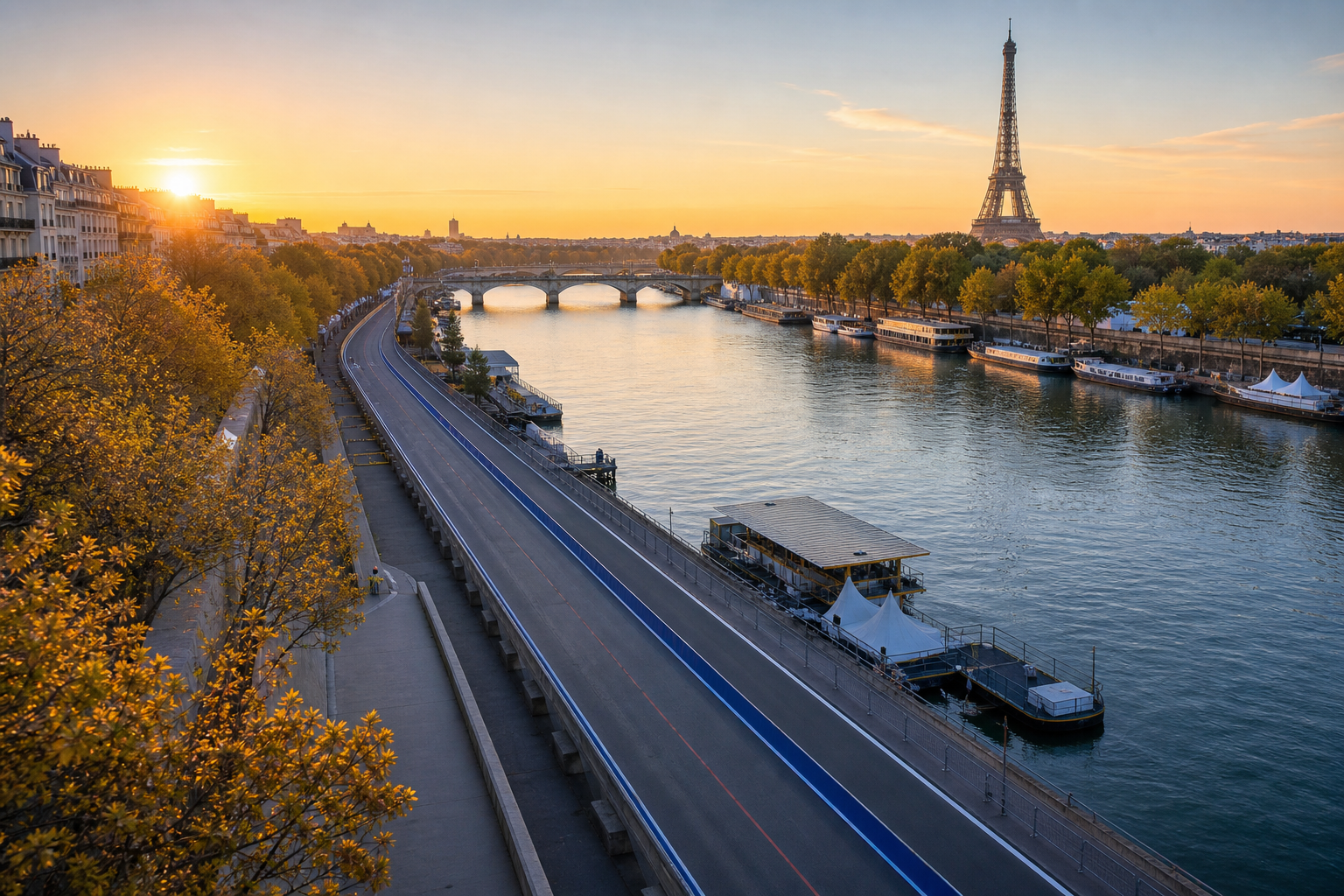
For spectators, the relay format means six natural viewing spots — one per exchange zone. Follow the live-tracking app the organizers promote each year (search “MAIF Ekiden de Paris” in your app store close to race week) to hop between legs without guessing where your runner is.
Course character: Mostly flat. The 10 km legs reward steady pacing; the final 7.195 km anchor leg is where teams with depth pull ahead. If you are assigning legs within your group, put your most consistent tempo runner on the second 10 km — it often decides placement in amateur categories.
Getting There: Metro, RER, and November Travel Notes
For runners and spectators:
- Metro line 6 — Bir-Hakeim (walk to the Eiffel Tower / quays)
- RER C — Champ de Mars — Tour Eiffel
These are the stations the organizers reference year after year for access to the village and course. Allow extra time on race morning — road closures around the 15th and 7th arrondissements start early.
Airport transfers: If your team flies in Friday or Saturday, RER B from CDG is the usual budget option. Check RATP disruption notices for early November — maintenance windows on RER B have clashed with past race weekends between southern Paris stops and central hubs. Having a Metro 6 / RER C backup route from your hotel saves stress.
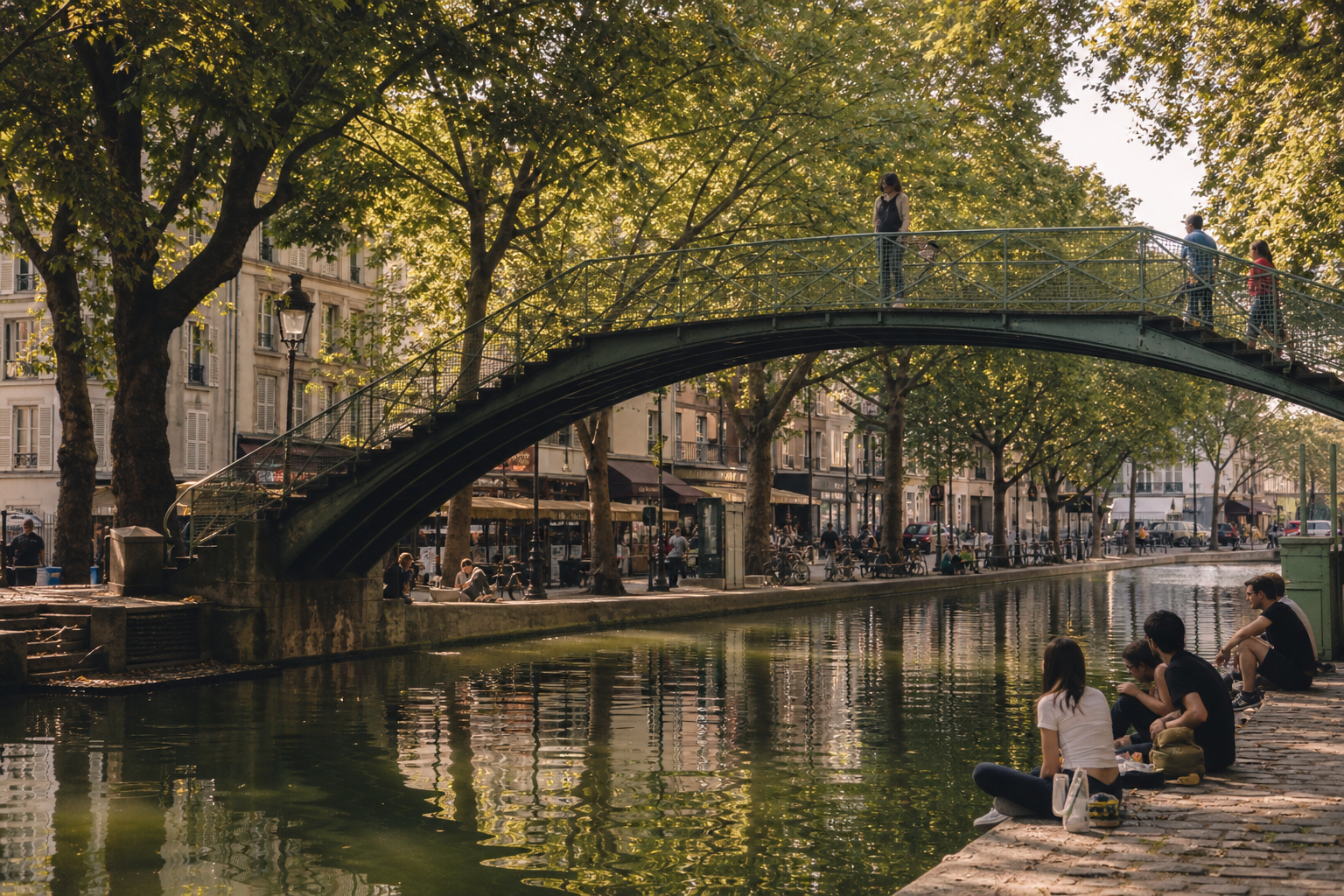
Where to stay: Teams often cluster in the 15th arrondissement (walking distance to bib pickup and warm-up) or 7th (Eiffel Tower area, slightly more tourist-priced). For a local-feel base with good Metro links, the 11th or Canal Saint-Martin area works if you do not mind a 20-minute ride — see our Canal Saint-Martin neighborhood guide for why it is worth considering.
Building Your Team: Who Should Run Which Leg?
You do not need six identical runners. A mixed-ability corporate team can finish proudly; a club team hunting qualifying times will stack legs differently.
| Leg | Distance | Who to put here |
|---|---|---|
| Leg 1 | 5 km | Fast starter — sets tone without burning the team. Think 5K parkrun pace, not sprint. |
| Leg 2 | 10 km | Your most reliable aerobic engine. This is the work leg. |
| Leg 3 | 5 km | Recovery leg for a strong 10K runner, or a sharp 5K specialist keeping contact. |
| Leg 4 | 10 km | Often the second-hardest assignment — mentally tough mid-race. |
| Leg 5 | 5 km | Short reset before the anchor. |
| Leg 6 | 7.195 km | Your closer — someone who can hold form when lactic acid and November chill set in. |
Exchange zones are timed and marshalled; practice the sash handoff if your team rules require it (FFA events use standard relay rules — read the technical guide PDF when it drops on the official site each year).
Race Weekend Timeline (Visitor-Friendly)
| Day | What to do |
|---|---|
| Friday | Travel, easy shake-out jog along the Promenade du Pailleron or Bois de Boulogne if you need soft surface. No hero workouts. |
| Saturday | Bib pickup at the gymnasium, team photo, carb-focused dinner. Pick up any last-minute gels or tape at running shops in the 15th — Le Running Store and similar specialty retailers cluster near serious club culture in western Paris. |
| Sunday | Warm up 45 to 60 minutes before your first leg runner’s wave (confirm wave assignment at pickup — elite and mass teams may start in blocks). Non-running teammates: coffee on the quays, then reposition for each exchange. |
| Monday | Recovery. You earned it. |

Training in Paris Before Race Week
If you arrive a few days early, Paris is runnable year-round — but November means 10-14 C, possible rain, and shorter daylight. Pack layers, a light gloves/hat combo, and shoes with grip for wet cobblestones on cool-down jogs through side streets.
For a structured active day that mixes movement with neighborhoods tourists skip, FlipTrip — create your own trip strings sunrise running energy, functional fitness stops, and food that fits an athlete’s schedule — useful as a template for how to see the city without living entirely in the 7th arrondissement expo bubble.
That link is intentional: sport travel articles should still connect you to the city, not just the start line.
Spectating Without Running
Not racing? The ekiden is arguably more fun to watch than a solo marathon — six bursts of drama, smaller gaps between leaders, and exchange-zone sprints that feel like track relays dropped onto a city backdrop.
Bring a Navigo Easy or contactless card for hop-on Metro repositioning. Pack a portable charger; live tracking drains batteries cold.
Combine the afternoon with a low-effort wander — the Trocadero viewpoints stay open, and November light on the Seine is underrated for photography.
How This Fits FlipTrip’s Paris Coverage
The MAIF Ekiden sits at the intersection of event travel and city travel — exactly the kind of rising-interest topic we are adding alongside our core Paris guides. You are not flying to Paris only to run 5 km and fly home; you are using a world-class relay as the spine of a November trip.
Pair this guide with:
- Canal Saint-Martin: Paris Beyond Tourist Cliches — for where to eat after the race
- create your own trip — for a recovery-day route with real neighborhoods
More active-travel guides — Hyrox Paris, spa recovery, and seasonal Paris weather for race prep — are on our editorial calendar for later this year.
Quick FAQ
Is the MAIF Ekiden the same as the Paris Marathon?
No. The Schneider Electric Marathon de Paris is a solo (or charity) marathon in spring. The MAIF Ekiden is a team relay in autumn, six runners, FFA-organized.
Do I need to be in a French running club?
International teams and corporate groups regularly participate — verify eligibility categories on the registration portal. Club affiliation rules differ by division.
Will it sell out?
Recent editions have. Register when your roster is confirmed; do not wait for perfect weather forecasts.
Can I visit Paris only to spectate?
Absolutely — exchange zones along the Seine are accessible on foot from Metro 6 and RER C stations.
FlipTrip Team — fact-checked against official MAIF Ekiden de Paris sources, July 2026. Confirm dates, bib pickup hours, and registration categories on maif-ekiden-paris.fr before booking non-refundable travel.